
Last updated October 30, 2026
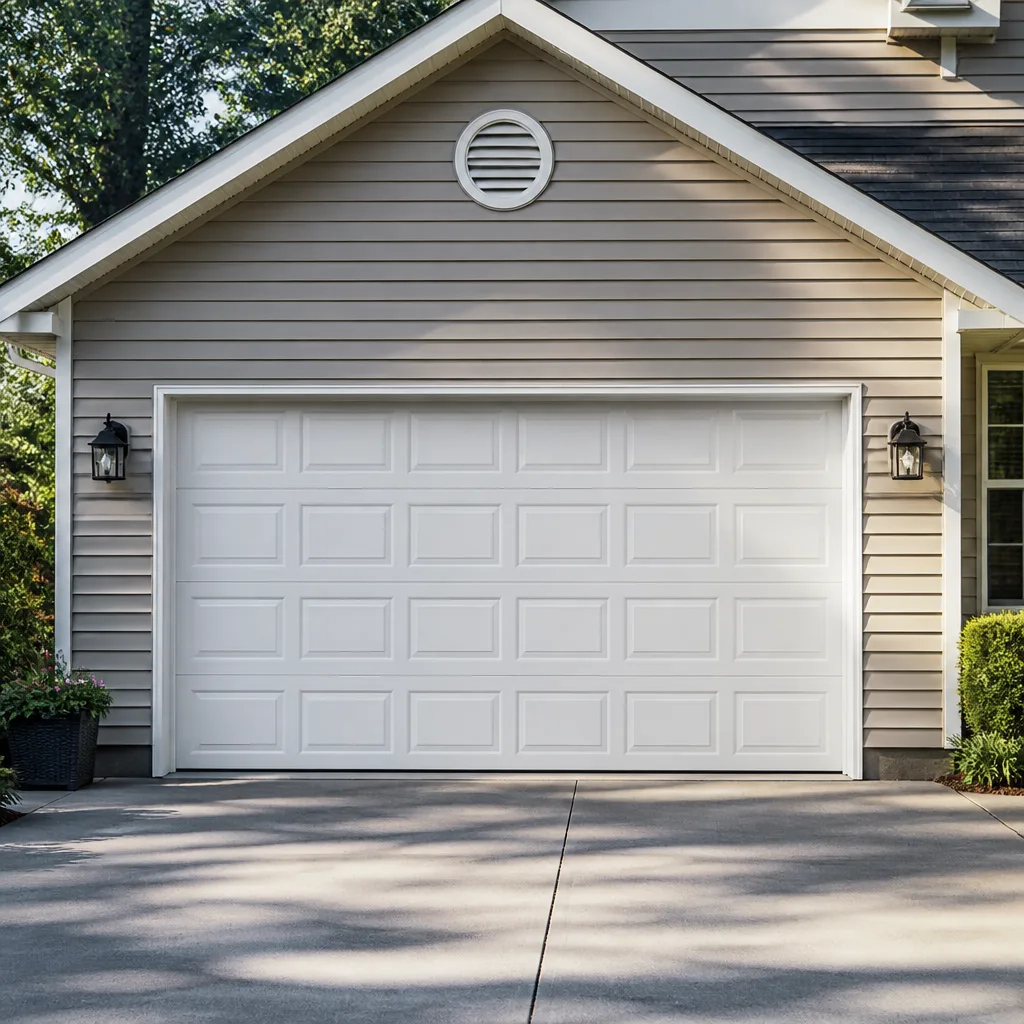 Raised-panel steel
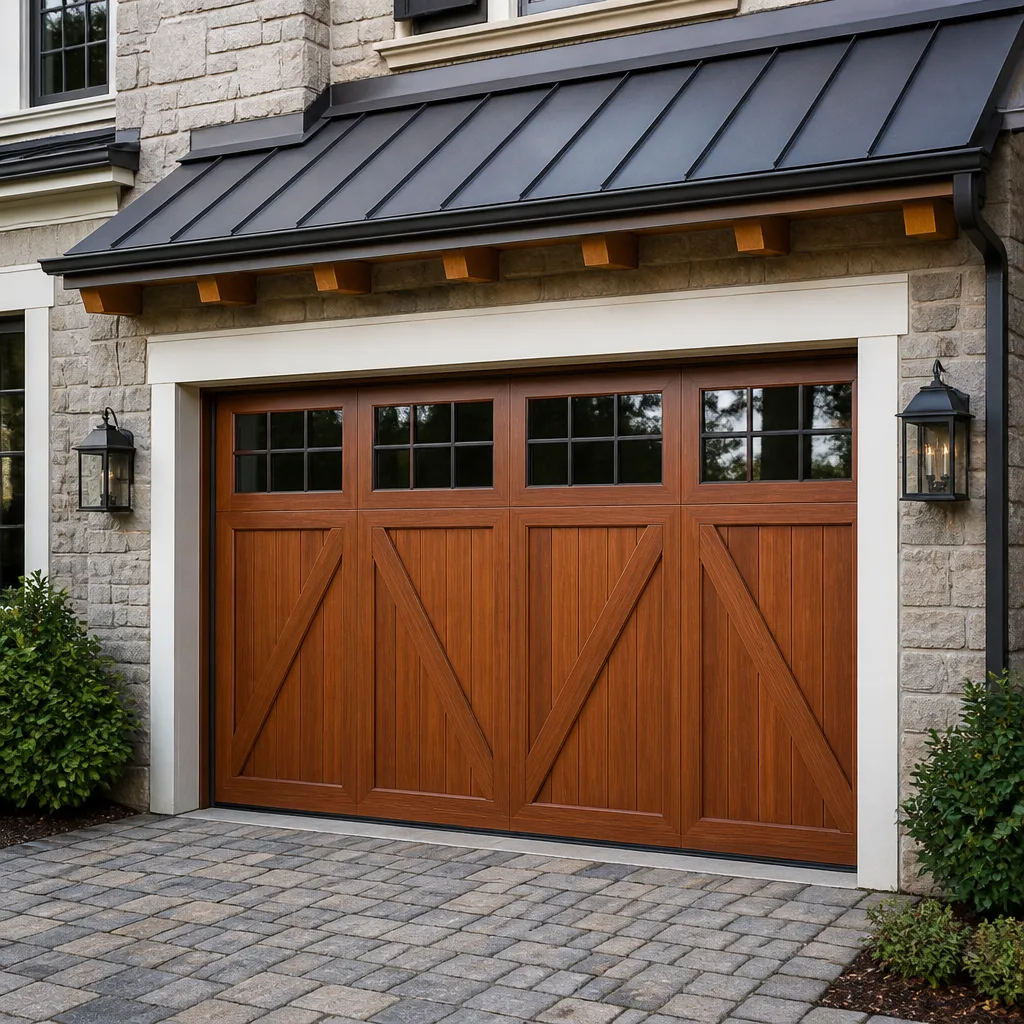 Carriage house
 Modern flush
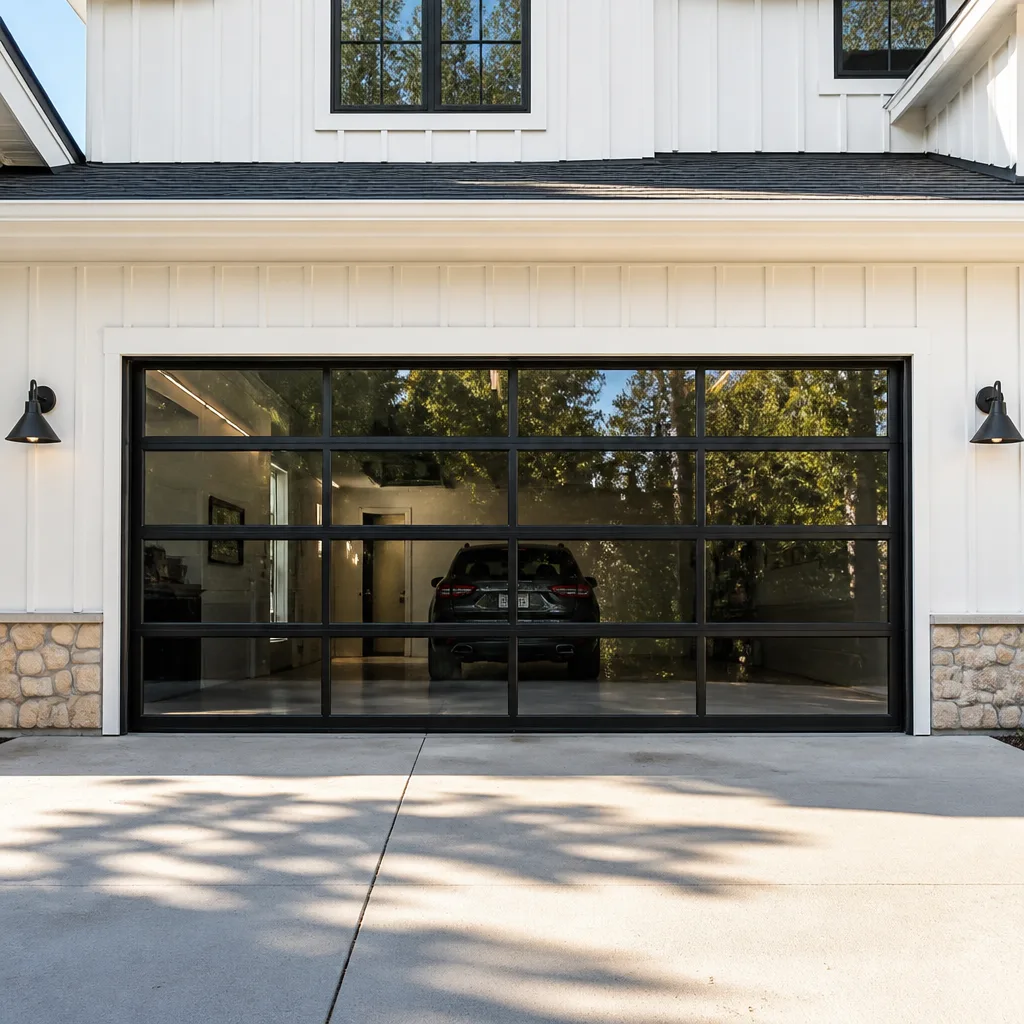 Full-view glass
 LiftMaster openers
 Chamberlain openers
Full 25-point door and opener safety check with every visit - springs, cables, rollers, tracks, and your LiftMaster or Chamberlain opener included
You get a price before we start. It does not change when the truck arrives.
Get your free estimateGarage Door Emergency Preparedness Guide for Temecula Homes
Here’s something that surprises most Temecula homeowners: the garage door is the largest moving object in your house, and it’s also the one piece of emergency equipment you probably haven’t tested since the day you moved in. During the 2019 power shutoffs and again during the 2020 wildfire season, thousands of Riverside County residents stood in dark garages pulling a red cord that wouldn’t release, or worse, released a door that came crashing down because the springs had failed months earlier without anyone noticing. This guide covers exactly what Temecula homeowners need to know before the next outage, earthquake, or evacuation order hits: how your manual release actually works, what earthquake movement does to door hardware, which backup batteries are worth buying, and how to prop a door safely when the power’s out and you need airflow. We’ve built this from years of repair calls across Murrieta, Wildomar, Menifee, and Temecula proper. The problems are consistent. The fixes are too.
Quick Answer
Every Temecula home with an automatic garage door opener should have a tested manual release procedure, a plan for operating the door during a power outage, and a visual inspection routine for earthquake or wind damage before anyone touches the opener button. For a step-by-step approach, see our Garage Door Repair Maintenance Checklist for Temecula Homeowners. Garage door emergencies in Temecula cluster around three events: grid outages from fire-prevention shutoffs, seismic movement along the Elsinore fault, and evacuation orders where a stuck door means a trapped car. The single most important step is testing your manual release cord monthly, so that when the power’s out and you’re standing in the dark, your hands know exactly what to do.
Styles & brands we work with
Table of Contents
- How the Manual Release Works on the Most Common Temecula Openers
- Operating Your Garage Door During a Power Outage
- Earthquake Preparedness: What the Elsinore Fault Means for Your Door
- Wildfire Evacuation Protocol: Why Your Door Should Stay Closed
- Battery Backup Openers: What’s Worth the Money
- How to Safely Prop a Door Open for Ventilation
- The 10-Minute Monthly Door Check That Prevents Most Emergencies
How the Manual Release Works on the Most Common Temecula Openers
The manual release is a red cord hanging from the trolley mechanism on your opener’s rail. Pulling it disconnects the door from the motor carriage so you can lift the door by hand. That’s the theory. In practice, the cord only works if the door is properly balanced, which means the torsion springs are in good condition and the tracks are aligned. We see this all the time in Temecula: homeowners pull the release cord during an outage, the door doesn’t move, and they assume the release is broken. Usually the release worked fine. The springs were shot, and the full weight of a 150-to-200-pound door was never going to be lifted by hand regardless of the cord.
Here’s how the release sequence works on the brands most common in Temecula homes, and what takes people by surprise with each one:
- Chamberlain and LiftMaster openers (they share parent company Chamberlain Group and use nearly identical release mechanisms): Pull the red handle straight down firmly, toward the garage floor, not at an angle toward the door. You’ll hear a clunk as the trolley disengages. The door is now free to move by hand. If you don’t hear the clunk, pull again with more force. If the cord feels stuck, the trolley may be under tension from the door pressing against it, which usually means the door’s travel limits need adjustment.
- Genie openers: Genie’s emergency release is a red cord attached to a release lever on the carriage assembly. Pull down and back toward the garage door opening in one motion. Genie’s design is a little less forgiving than Chamberlain’s if the door is under load, so if the opener was mid-cycle when power cut out, you may need to push the door upward an inch while pulling the cord to relieve carriage pressure.
- Craftsman openers: Older Craftsman units (pre-2018) are mechanically identical to LiftMaster because they were made by the same manufacturer. The release cord works the same way. Newer Craftsman units sold through Lowe’s use a sled-style release that requires a firm horizontal pull toward the garage interior, not downward.
The test is simple and takes under a minute. With the door closed and the opener plugged in, pull the release cord. Try to lift the door by hand. It should rise smoothly to about waist height and stay there without you holding it, and it should take no more than 10 to 15 pounds of effort. If it’s heavy, dropping, or won’t stay up, your springs are failing. That’s a repair call now, not during an emergency. If the door rises and then slowly drifts down, that’s a balance problem that will only get worse in Temecula’s summer heat, when metal components expand and springs lose tension slightly. Reconnect by pulling the cord again and pressing the opener button; the trolley re-engages automatically on the next cycle on most modern units.
For homes with older Raynor or Wayne Dalton openers, the release mechanism functions similarly but the cord may be located off-center on the rail. The principle is identical: disengage, lift by hand, assess balance. Whatever brand is on your door, test it monthly. The knowledge matters more than the brand.
Operating Your Garage Door During a Power Outage
A power outage turns your garage door from a convenience into a manual door, and that only works if two things are true: the door is balanced, and you know where the release cord is in the dark. Temecula residents learned this the hard way during the October 2019 SCE public safety power shutoffs, when some neighborhoods in the eastern part of the city near Anza Road and Butterfield Stage Road went dark for over 48 hours. Cars stayed trapped in garages not because the doors were broken, but because the release cords hadn’t been tested in years, and in several cases the release mechanism itself had seized from disuse and exposure to garage humidity.
Here’s the sequence we recommend for Temecula homes, refined from a decade of post-outage service calls:
- Before the outage: Locate your release cord. It’s typically red, hangs about two feet from the opener motor, and may have a plastic handle. Clear any storage from below it so you can reach it without moving boxes.
- When the power drops: Don’t press the opener button repeatedly. Power may come back briefly and you don’t want a partially open door. Go to manual mode immediately if you need the car.
- Pull the release: Firm, confident pull toward the floor. You’ll feel and hear the disconnect.
- Lift the door by hand: Use the door handles or the bottom edge. If it doesn’t move easily, stop and reassess. Forcing a door with broken springs can pull the cables off the drums and create a genuinely dangerous situation.
- If you’re leaving the garage through the pedestrian door and the garage faces the street, close the main door behind you manually. An open garage during an outage is an invitation, particularly in Temecula’s family neighborhoods where evacuation patterns are predictable.
One more point that doesn’t get enough attention: after power returns, the opener’s travel limits and force settings sometimes reset or drift, especially on older Chamberlain and Genie units that lack onboard memory backup. If your door starts reversing unexpectedly or stopping a foot short of the ground after an outage, the logic board needs a reset cycle. That’s a five-minute fix for most technicians and a genuinely frustrating DIY problem if you haven’t seen it before. Our advice: if the door behaves differently after an outage, call a specialist rather than adjusting the travel screws yourself. Garage Door Repair in Temecula calls spike in the 24 hours after every major outage for exactly this reason.
Earthquake Preparedness: What the Elsinore Fault Means for Your Door
The Elsinore fault runs roughly 15 miles east of Temecula and is capable of producing a magnitude 6.5 to 7.5 event. The last significant rupture on the fault’s northern section was in 1910, and the U.S. Geological Survey classifies the southern segment as one of the higher-risk faults in Southern California. What does this mean for your garage door? Seismic movement affects garage door systems in predictable ways, and knowing what to look for after a shake can prevent a door from falling or a opener from burning out its motor.
After any earthquake strong enough that you felt it in Temecula, do this before operating the door by opener:
- Visual check from inside: Look at the horizontal track where it meets the vertical track. This joint, called the radius, is the most common failure point in seismic events. The track may have shifted inward or outward by as little as a quarter inch, which is enough to cause the rollers to bind.
- Check the rollers: Look at each roller where it sits in the track. A roller that’s popped out of the track leaves a visible gap. A roller that’s sitting at an angle means the track section is bent.
- Look at the spring system: For torsion springs (the ones mounted on a shaft above the door), check whether the spring coils look evenly spaced. A gap or tight spot in the coil pattern can indicate the spring has shifted on the shaft. For extension springs (the ones that run along the horizontal tracks), confirm both springs are still connected at both ends and that no safety cable has come loose.
- Check the cables: The lift cables run on both sides of the door from the bottom brackets up to the drums on the spring shaft. After seismic movement, cables can jump off the drum. If a cable is loose or off the drum, do not operate the door. Close the door manually only if it will stay down, and call a technician. A door with one cable off can rack in the opening and come out of the track entirely.
- Test manually first: Pull the release and try to open the door by hand before ever pressing the opener button. If it binds, grinds, or won’t move, the opener will only make the damage worse.
In our experience serving Temecula and the surrounding valley, the damage pattern after a moderate quake is usually minor track misalignment at the radius joint, which is a straightforward fix, but it requires the right equipment and technique because the tracks are under spring tension. The bigger risk is operating the door without checking, which can pull a slightly misaligned roller fully out of the track and drop a panel corner onto whatever is below it. After any noticeable seismic event, treat your garage door like you’d treat a cracked chimney: inspect first, operate second.
Wildfire Evacuation Protocol: Why Your Door Should Stay Closed
Temecula sits in a high-fire-risk zone that has seen multiple evacuation orders in the past decade, most notably during the 2020 fires and the 2023 Highland Fire that burned near Aguanga. The garage door plays a specific role in wildfire safety that most homeowners haven’t heard about, and it goes against instinct.
Your first instinct during an evacuation might be to leave the garage door open so you can drive out quickly. That’s the wrong move for two reasons. First, an open garage door during an approaching fire creates a wind channel that pulls embers directly into the structure. Research from the Insurance Institute for Business and Home Safety, which operates the wildfire testing facility in Richburg, South Carolina, shows that garage doors are one of the primary ember entry points in home ignitions. Embers accumulate at the base of an open garage door, ignite stored materials, and the fire spreads into the attic through the garage-to-house wall. Second, once the power fails or the fire’s heat warps the tracks, an open door may not close again. You’ve left your home’s largest opening unprotectable.
The correct wildfire protocol for Temecula homes:
- Keep the door closed at all times during high fire danger periods, even when you’re home. This is standard practice in the California Fire Code for homes in Wildland-Urban Interface zones, which covers much of Temecula’s eastern and southern foothills.
- Test your manual release monthly during fire season (June through November in Temecula). Your evacuation plan should assume the power will be out when you need to leave.
- If an evacuation order comes, open the door manually only long enough to move your vehicle out, then close it manually behind you. Do not rely on the opener because a power outage could strand you halfway through the cycle.
- Park vehicles facing outward whenever possible during red flag warning days. This reduces the time your door needs to be open and eliminates a multi-point turn in a smoky, low-visibility situation.
- Consider a garage door with a fire-rated core if you’re replacing your door anyway. Steel sandwich construction with an insulated core resists ember penetration better than single-layer steel or wood. Garage Door Installation in Temecula customers in fire-prone areas like De Luz and Glen Oaks frequently ask about this, and it’s worth the upgrade for homes on the wildland boundary.
The garage door industry has paid more attention to ember intrusion testing in the last five years than in the previous three decades. Modern door designs with tight perimeter seals and fire-resistant weatherstripping make a measurable difference. If your door has gaps you can see daylight through at the bottom corners or along the top, those gaps are ember entry points. They’re also easy to fix with replacement weatherseal.
Battery Backup Openers: What’s Worth the Money
Since July 2019, Garage Door Permits, Codes & Inspections in CA: What You Need to Know explains that California Building Code Section 6303 has required battery backup on all newly installed residential garage door openers. This means if you bought a new opener in the last six years in Temecula, you probably already have one. The question is whether it works, because battery backup performance in real-world conditions varies dramatically by brand and installation quality.
Here’s the honest picture based on what we replace and service across Temecula:
| Backup Type | Real-World Performance | Good For |
|---|---|---|
| Genuine LiftMaster and Chamberlain integrated backup (models with the battery mounted inside the motor unit) | Consistently delivers 15-30 open/close cycles on a healthy battery. The battery lasts 2-3 years and degrades gradually. | Reliable multi-day outage coverage |
| Genie integrated backup (Aladdin Connect and similar) | Generally 15-20 cycles. Genie’s battery management has improved in recent models; older units drain faster in high heat. | 24-48 hour outage coverage |
| Aftermarket external battery backups (sold as universal add-ons) | Highly variable. Many units we see are still in the box six months after install. The wiring connections are the weak point, and they often fail within 18 months in Temecula’s summer garage heat. | Budget option with limited lifespan |
| Older Craftsman or Raynor units with no backup | No outage support at all. | Manual release is your only option |
A few things matter specifically in Temecula’s climate. Garage temperatures in the summer regularly exceed 100 degrees, and lead-acid batteries (which most backup units use) lose capacity faster in sustained heat. If your garage faces west and bakes in the afternoon sun, expect battery life at the shorter end of any manufacturer’s range. Second, battery backup only helps if the battery is charged and the unit is properly wired. If your opener was installed before 2019, it almost certainly doesn’t have backup power unless an aftermarket unit was added. Third, battery backup is not a substitute for knowing your manual release. Batteries die exactly when you need them, and the manual release never runs out of charge.
If you’re adding a battery backup to an existing opener, we generally steer Temecula homeowners toward the brand-matched integrated units rather than universal add-ons, even though they cost more upfront. The failure rate on universal kits in our service area is high enough that we’ve stopped recommending them for anything other than temporary use. For an exact recommendation based on your opener model, call us and we’ll tell you what fits. Garage Door Opener Repair in Temecula covers all the major brands, so we’re not limited to one manufacturer’s lineup.
How to Safely Prop a Door Open for Ventilation
During extended power outages in Temecula’s summer months, the garage gets hot. That’s not a comfort issue, it’s a storage problem: anything temperature-sensitive in your garage, from paint to wine to certain chemicals, degrades faster above 90 degrees. Many homeowners respond by opening the garage door a few inches or propping it fully open. There’s a safe way to do this and a dangerous way, and the difference matters.
The dangerous way is using a broom handle, a piece of lumber, or a bicycle to hold the door partially open while the springs are still connected. Here’s why: a garage door’s weight is supported by the spring system, not by whatever you prop it with. If a spring lets go while the door is propped, the full weight of the door comes down on your prop, and the prop either breaks or shoots out sideways. We’ve seen a 2×4 fired across a garage like a spear. We never want to see that again.
The safe procedure for propping a Temecula garage door open for ventilation:
- Pull the manual release first. This disconnects the door from the opener, but the springs still carry the load. You’re not releasing spring tension, you’re just removing the opener from the equation.
- Decide whether the door needs propping at all. A properly balanced door will stay open at any height on its own, held by spring tension. If your door stays up when you let go, no prop is needed and none is safe.
- If the door drifts down, do not prop it. A drifting door means failing springs, and the correct fix is spring replacement. Propping a door with weak springs is asking for a collapse. Call a technician.
- If you absolutely must prop a balanced door (for example, to keep it from being fully open for security reasons), use a purpose-built locking plier clamped onto the track just below a roller. Never place anything in the path of the door itself. The proper tool is a spring-loaded locking plier designed for this purpose, available at any hardware store. Clamp it on the vertical track section, not the curved radius.
- Keep the opening small. Six inches to one foot of opening provides meaningful airflow without creating a security risk or an ember entry point. More than that and you’ve effectively opened your garage to anyone walking by.
One additional Temecula-specific note: in wildfire season, never leave a garage door propped open unattended, even by a few inches. A wind-driven ember can clear a six-inch gap and land in stored cardboard or gasoline. During red flag warnings, ventilation is not worth the fire risk. Close it.
The 10-Minute Monthly Door Check That Prevents Most Emergencies
Most garage door emergencies in Temecula are not sudden failures. They’re the endpoint of months of wear that nobody noticed because nobody looked. This ten-minute monthly routine, done consistently, eliminates the majority of the emergency calls we respond to:
- Balance test (2 minutes): Pull the release cord and lift the door to waist height. It should stay put. Lift it to head height. Same. If it moves on its own in either direction, your springs are failing and need attention now, not later.
- Visual spring check (1 minute): Look at the torsion spring above the door. A visible gap in the coil means the spring has broken. If you see the gap, don’t operate the door and call for repair immediately.
- Track and roller check (2 minutes): Run your eye along both tracks from floor to ceiling. Look for rust (common in Temecula’s winter rain season), bent sections, or rollers that are visibly wobbling. Rollers should roll, not slide. Worn rollers grind flat and then bind.
- Safety reverse test (1 minute): Place a roll of paper towels under the door and close it. The door should reverse within two seconds of touching the towels. This is the sensor system that keeps the door from crushing children and pets. Test it monthly.
- Release cord test (1 minute): Pull the cord, confirm it disengages, then re-engage. This keeps the mechanism from seizing and keeps you familiar with the motion.
- Listen to the opener (2 minutes): Run the open and close cycle while standing in the garage. A smooth hum is normal. Grinding, clicking, vibration, or a change in pitch means something’s wearing. Early intervention on opener problems is far cheaper than motor replacement.
- Check the weatherseal (1 minute): Look at the rubber strip along the bottom of the door. In Temecula, this seal degrades in the summer heat and cracks within 2-3 years. A cracked seal lets in rodents, dust, and hot air, and in fire season it’s an ember entry point.
That’s ten minutes a month. Far less time than standing in a dark garage during an outage trying to figure out why the door won’t move. If any of these checks reveals a problem you’re not sure about, that’s a phone call. We’ll diagnose it over the phone without charging you for the conversation, and if a technician needs to come out, estimates are free. The Old Glory Garage Door home page has our full service information.
Common Mistakes to Avoid
- Testing the manual release for the first time during an actual emergency. The release cord mechanism can seize, the door can be out of balance, and you won’t know any of this until you’re standing in the dark with a car you can’t move. Test monthly.
- Assuming battery backup means no maintenance. The battery in a backup unit degrades over time, and Temecula’s summer heat accelerates that process. A two-year-old battery in a west-facing garage may already be dead. Check the indicator light and replace batteries proactively.
- Operating the door after an earthquake without a visual inspection. Even a small track misalignment can cause a roller to leave the track during operation, and a door that leaves its track can fall. Inspect the radius joints, rollers, and cables before pressing the button.
- Propping a door open with a board or tool. If the spring fails while the door is propped, the door becomes a falling weight and the prop becomes a projectile. The only safe prop is a locking plier clamped to the track, and only on a door that’s properly balanced.
- Leaving the garage door open during a wildfire evacuation. An open door is an ember funnel and a wind channel. Close it manually behind your vehicle, even if it costs an extra 60 seconds.
- Ignoring a door that’s become noisy or slow. Noise is the first sign of wear in rollers, hinges, and openers. A door that’s slower than it used to be is telling you the opener’s motor or the spring system is working harder than it should. Both problems are cheaper to fix early than late.
- Calling a generalist handyman for garage door work. Garage doors are under spring tension, and the forces involved are dangerous enough that the work should be done by someone whose entire trade is door systems. We’ve repaired doors that were “fixed” by handymen with the wrong parts, and the resulting failures are worse than the original problem.
See the difference
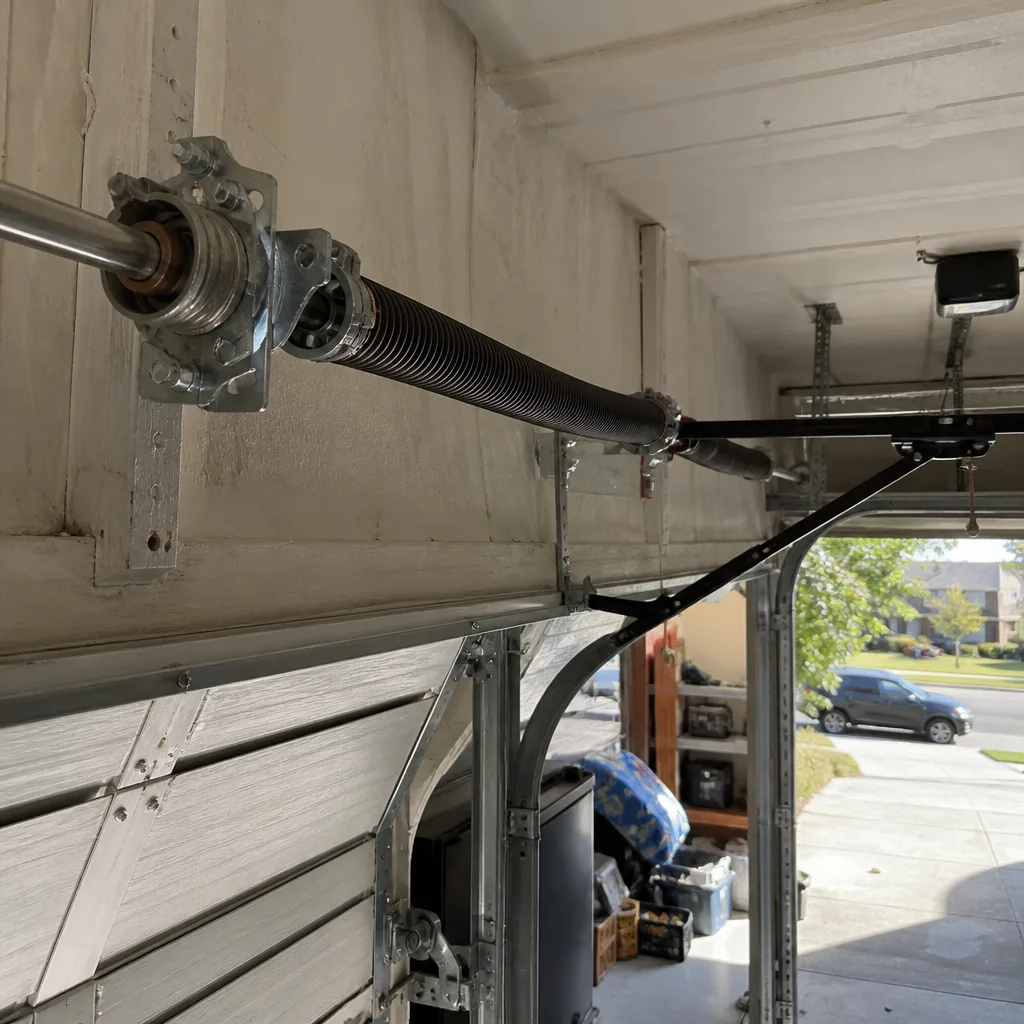
 Before
 After
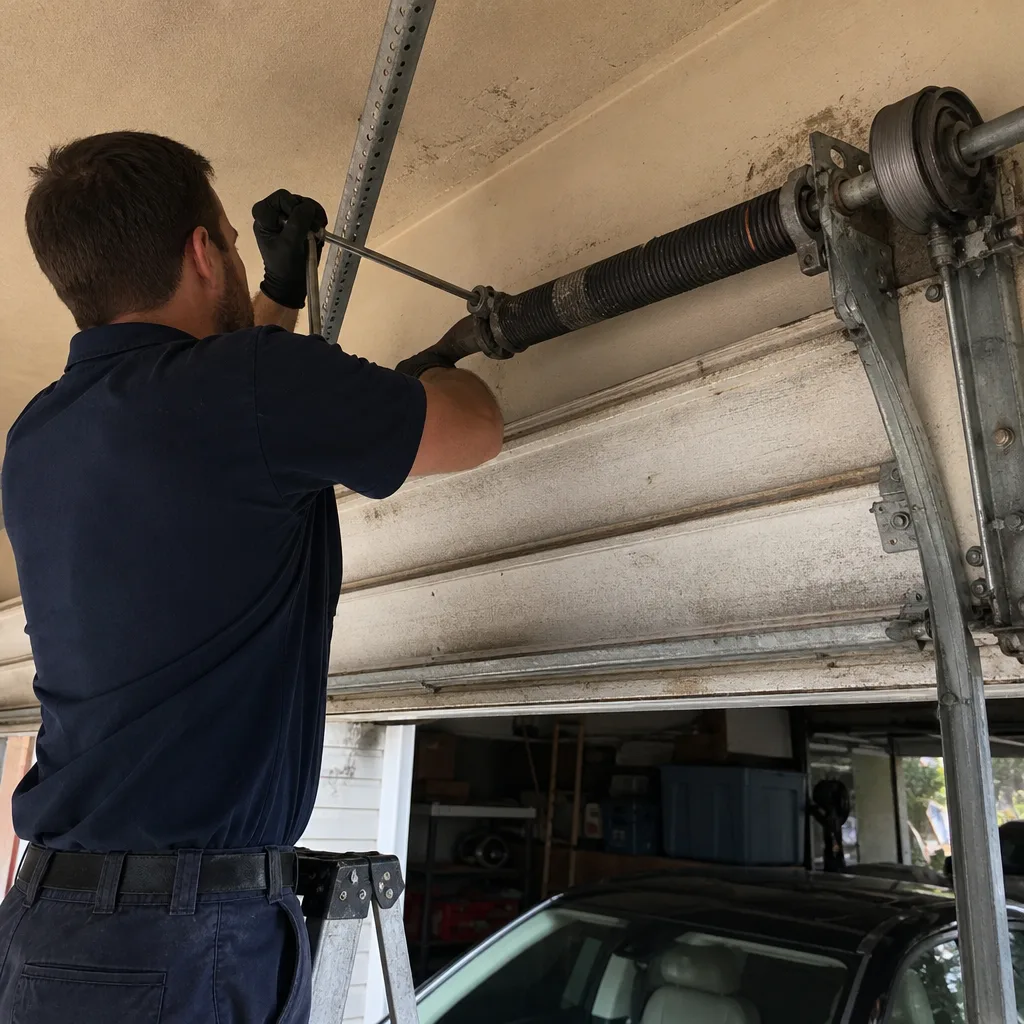
 Before
 After
 Before
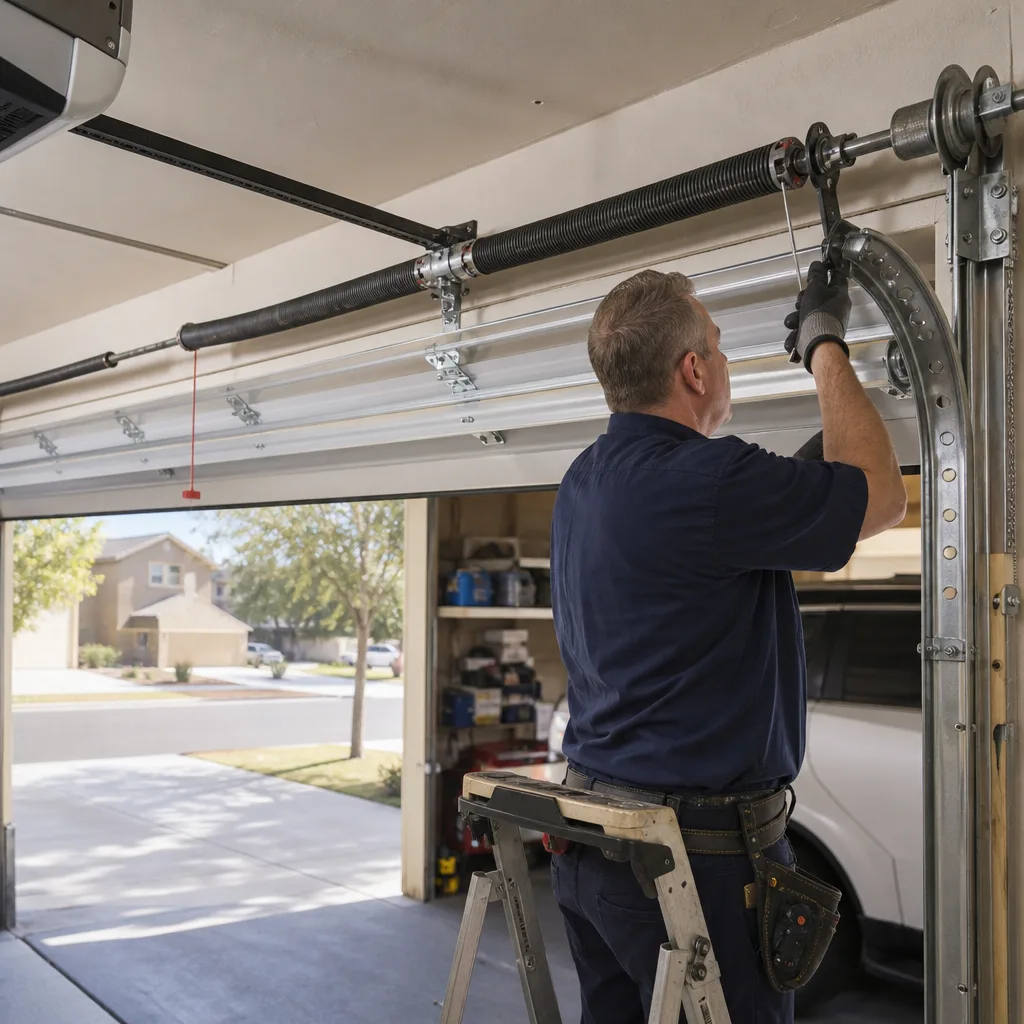 After
When to Call a Professional
Some garage door situations are safe to assess and address yourself: testing the release, checking the weatherseal, listening for unusual opener noise. Others aren’t. If your door has a broken spring, don’t operate it and don’t try to replace the spring yourself. The torsion springs on a residential door carry enough stored energy to cause serious injury, and the job requires specialized winding bars and a precise feel for tension. If your door has come off its track, if a cable has jumped the drum, if a panel is buckled or cracked, or if the opener is smoking, sparking, or making a grinding noise, those are professional calls. The diagnostic step? That can happen over the phone. We’ll ask you what you’re seeing and hearing, and we’ll tell you honestly whether a technician needs to come out. Old Glory Garage Door offers free estimates in Temecula. Call (877) 522-1085 and we’ll give you a straight answer.
Frequently Asked Questions
Pull the red manual release cord hanging from the opener rail, which disconnects the door from the motor, then lift the door by hand. This only works if your door is properly balanced, which means the springs are in good condition. Test the release and the manual lift monthly so you’re not figuring it out for the first time in the dark.
If your opener was installed after July 2019 in California, it’s required by building code to have battery backup. If it’s older, it probably doesn’t unless a backup unit was added later. Check for a battery icon or indicator light on the opener, or look for a separate battery pack wired to the unit. If you’re not sure, call (877) 522-1085 and we’ll help you identify what you have.
Leave the door closed until you’re ready to move your vehicle out, then open it manually, drive out, and close it manually behind you. An open garage door during a fire is an ember entry point that significantly increases the chance of home ignition. Keep the door closed during red flag warning days even when you’re home.
A door that won’t stay up when lifted by hand has failing torsion springs. The springs are what balance the door’s weight, and when they lose tension or break, the door becomes too heavy to hold open. This is a safety hazard and a professional repair. Operating a door with failed springs can pull the cables off the drums and cause the door to fall.
Yes, on most LiftMaster and Chamberlain units the battery is a simple drop-in replacement that takes about five minutes with a screwdriver. Genie units are similar. The battery is typically a 12-volt sealed lead-acid unit available from the manufacturer or a garage door supplier. If your opener isn’t charging the battery properly, that’s a larger issue worth a diagnostic call.
Test the auto-reverse safety mechanism and the manual release monthly, and do a full visual inspection of springs, tracks, rollers, and cables at the same time. Temecula’s summer heat and winter rain both take a toll on metal components, and monthly checks catch problems months before they become emergencies.
The Bottom Line
A garage door emergency in Temecula is rarely a surprise to anyone who’s been paying attention. The door tells you it’s struggling for months before it fails; you just have to listen and look. Test your manual release every month. Know that your backup battery exists and actually works. After any earthquake strong enough to feel, inspect before you operate. During wildfire season, keep the door closed and park facing outward on red flag days. If you’re not comfortable doing any of this yourself, you don’t have to. That’s what we’re here for. One call to (877) 522-1085 gets you a straight answer and, if you need a technician, a free estimate. The door on your garage is probably fine today. The goal is to make sure it’s fine on the day everything else goes wrong.
Written by the team at Old Glory Garage Door, serving Temecula since 2014. Explore more guides & resources on our blog.