
Last updated October 30, 2026
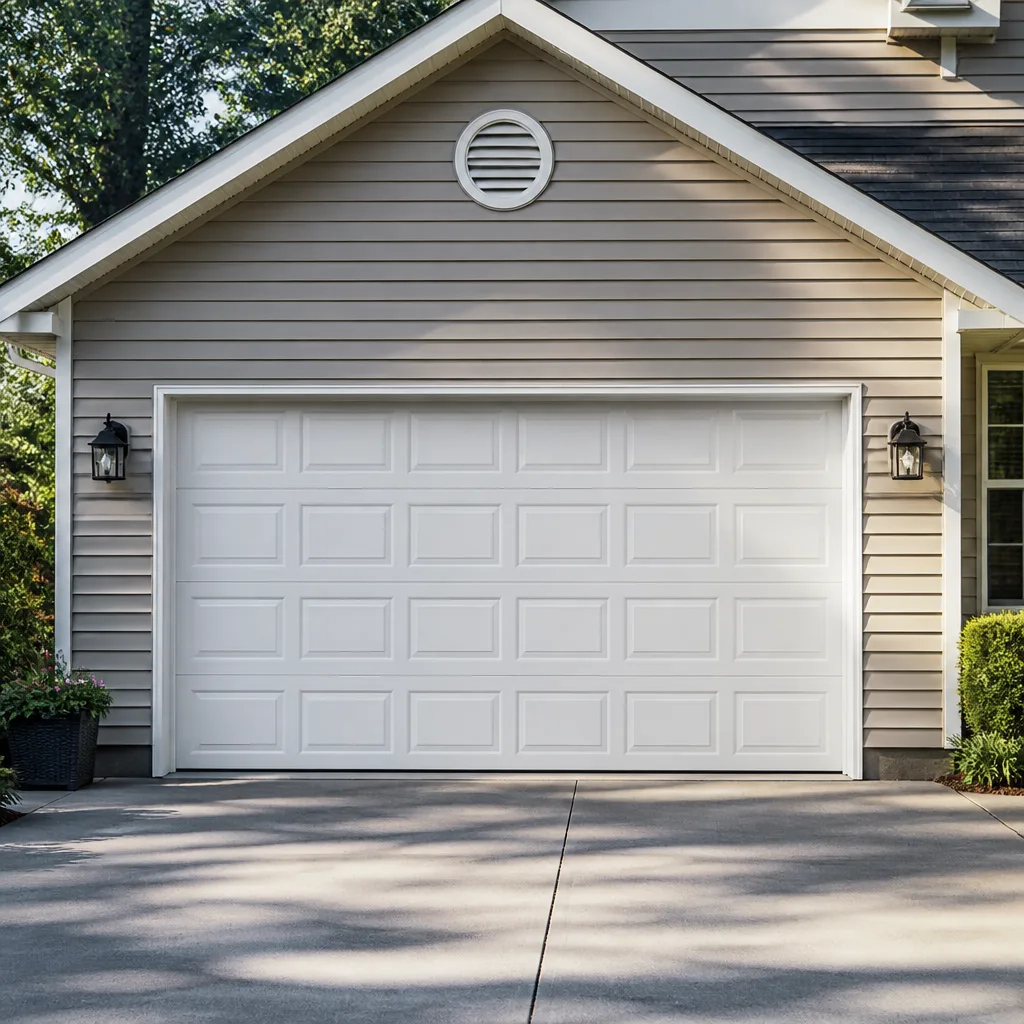 Raised-panel steel
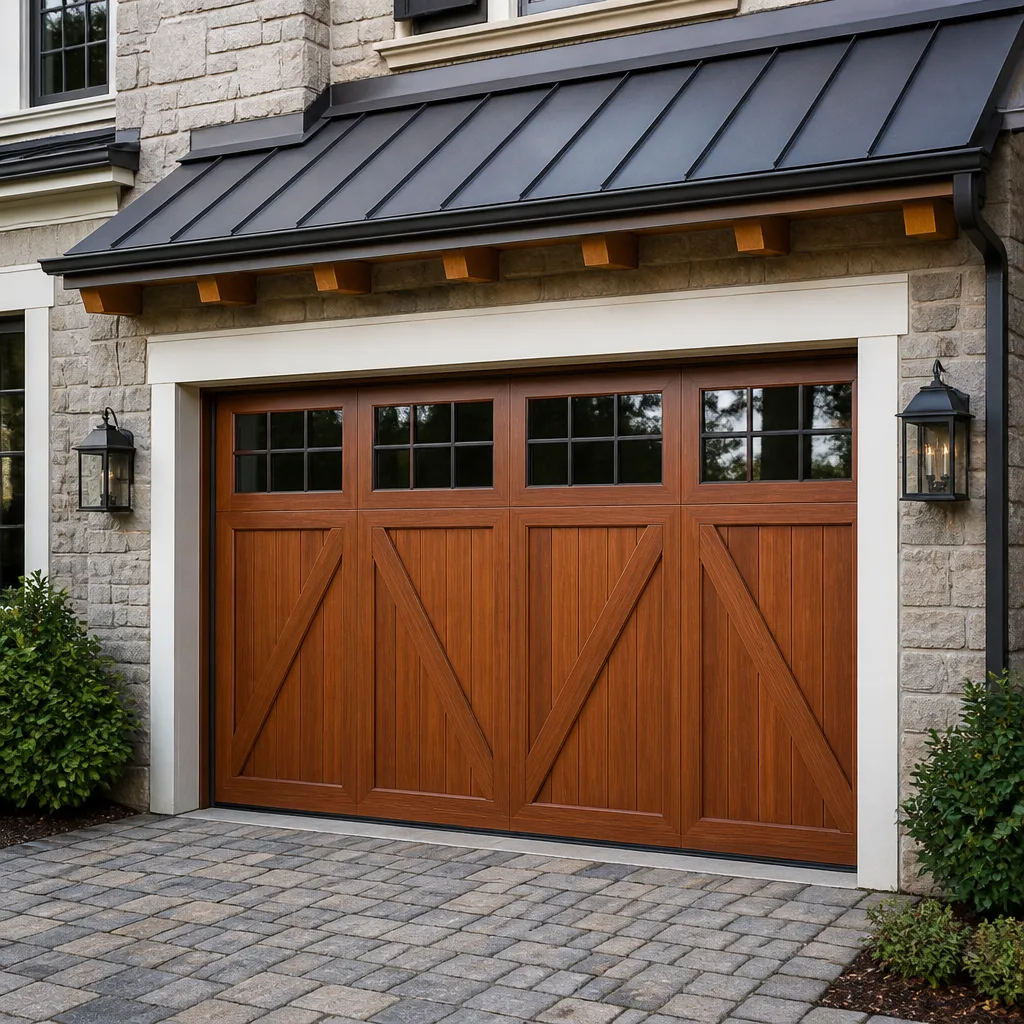 Carriage house
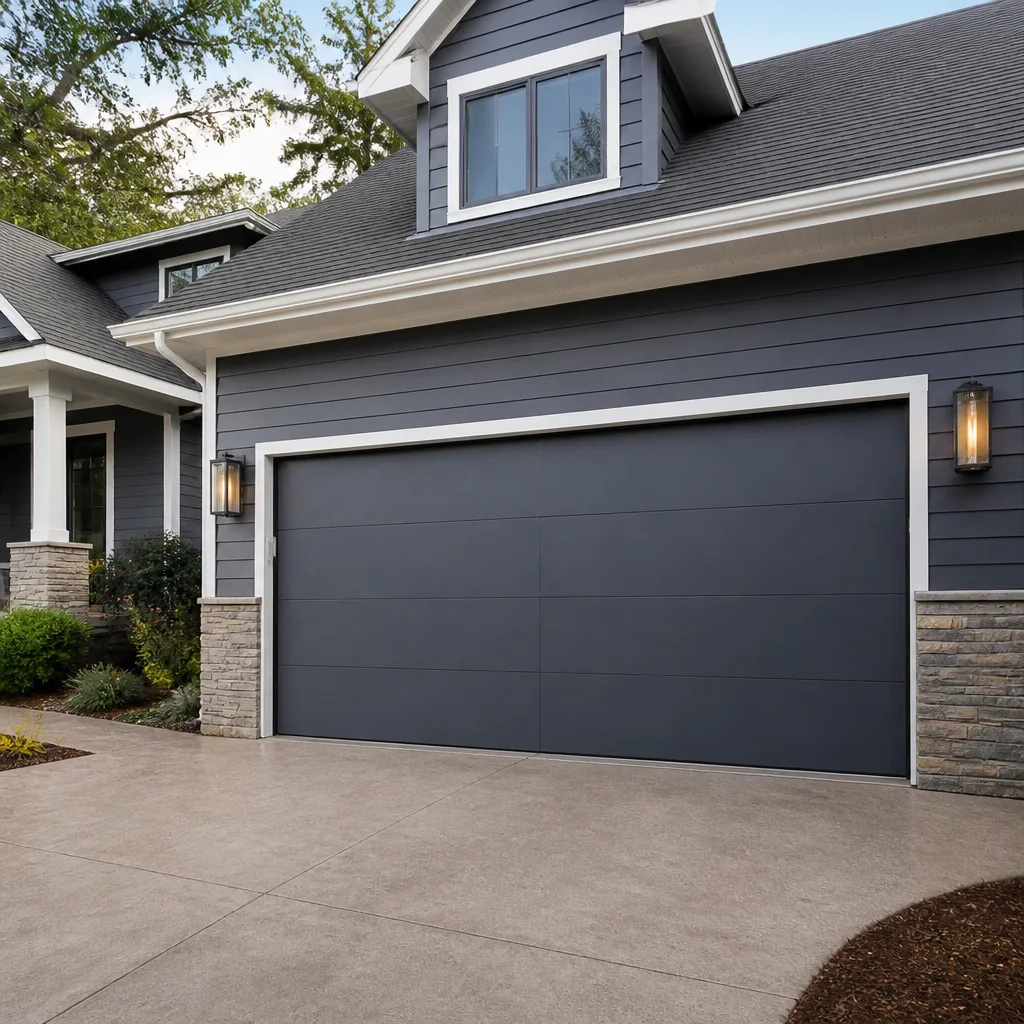 Modern flush
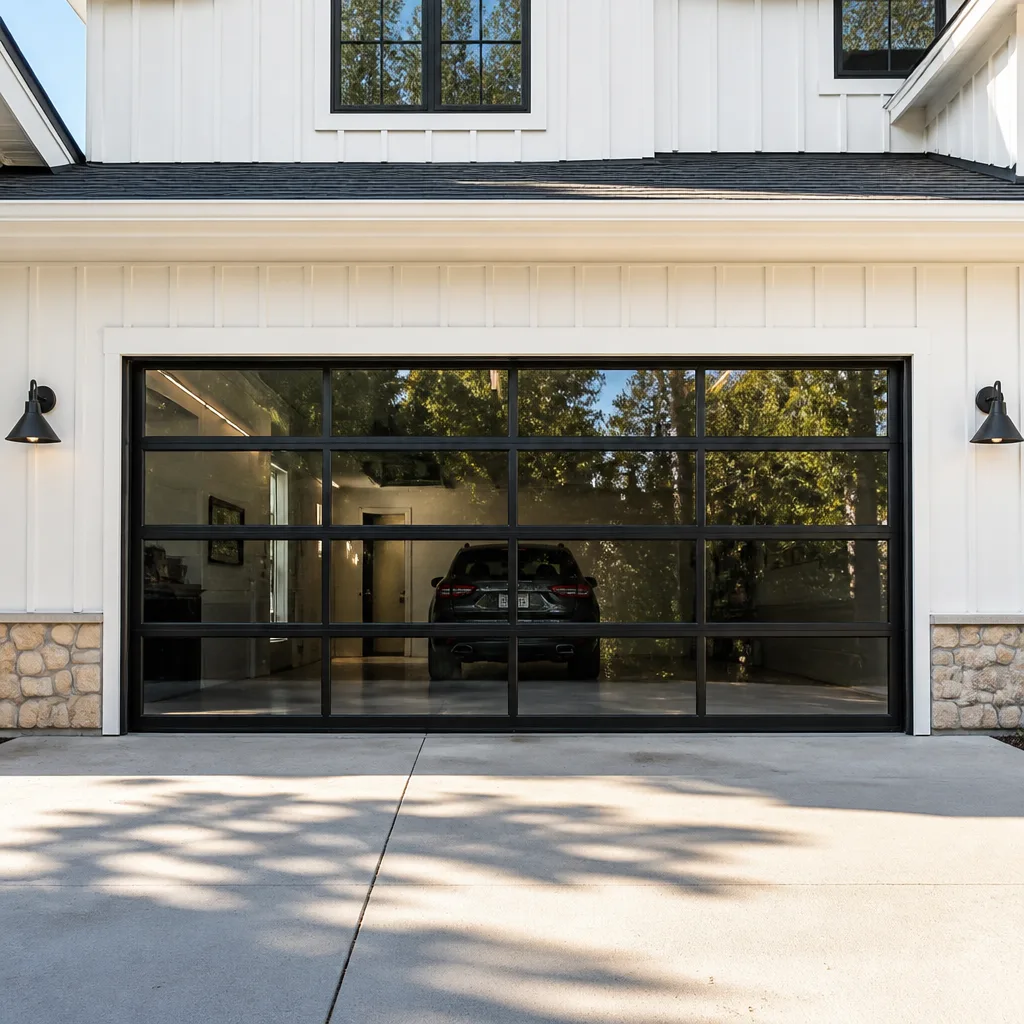 Full-view glass
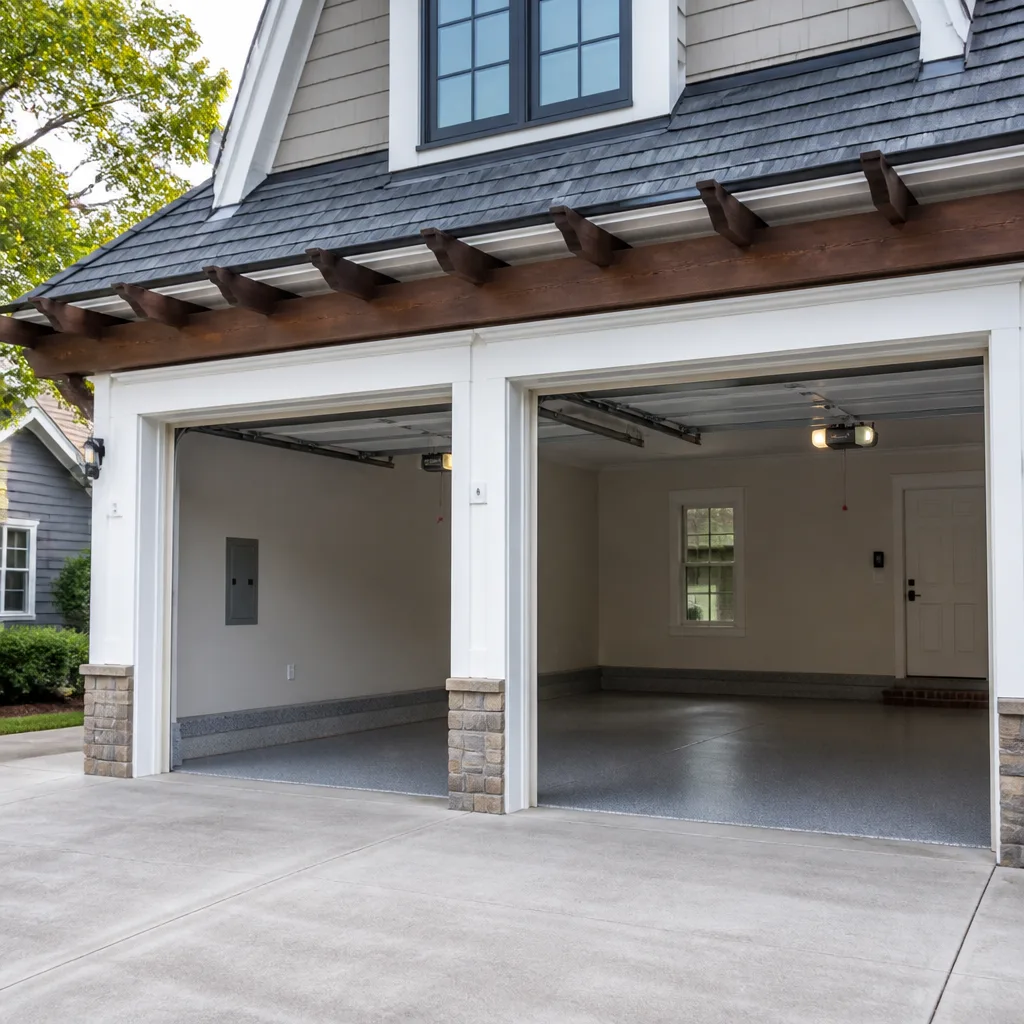 LiftMaster openers
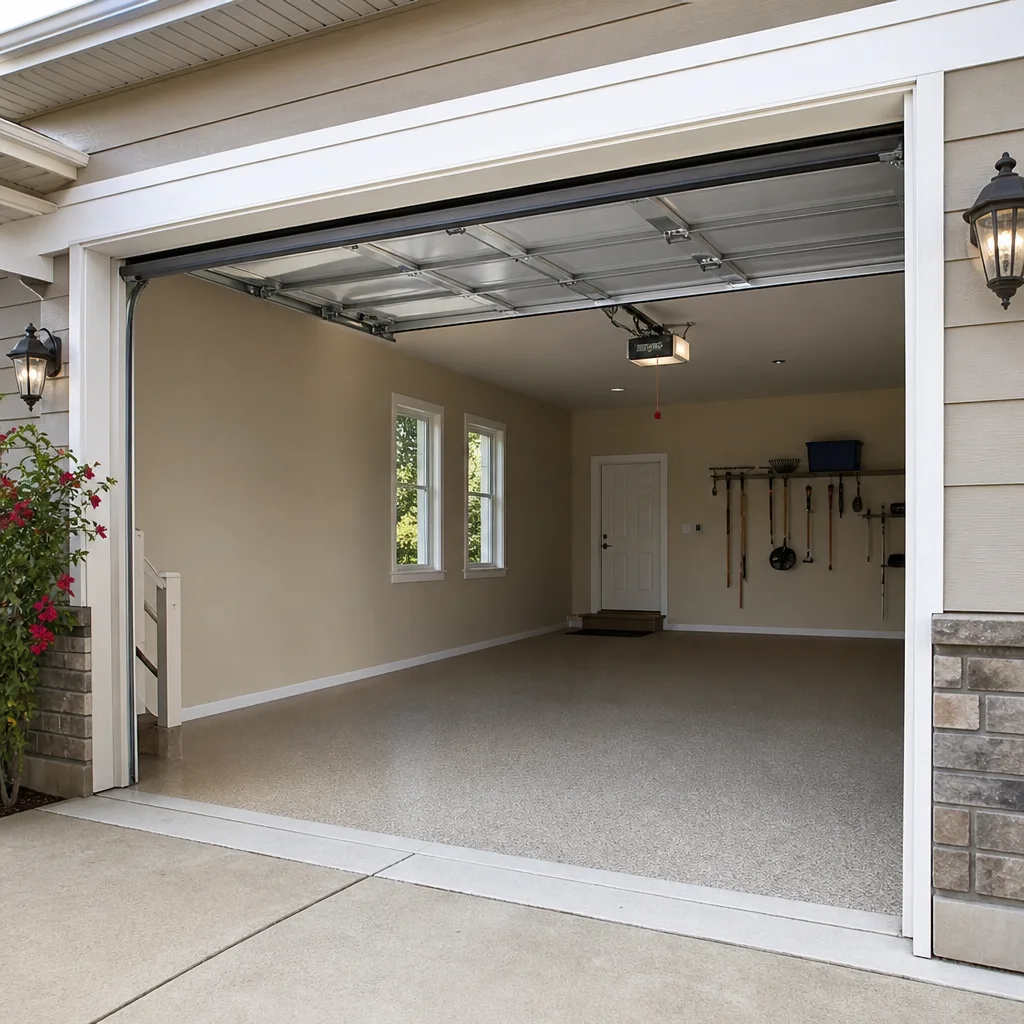 Chamberlain openers
Full 25-point door and opener safety check with every visit - springs, cables, rollers, tracks, and your LiftMaster or Chamberlain opener included
You get a price before we start. It does not change when the truck arrives.
Get your free estimateGarage Door Warning Signs: A Temecula Homeowner’s Reference Guide
Your garage door is the hardest-working moving object in your home. It opens and closes more than 1,500 times a year, lifts hundreds of pounds on every cycle, and gets almost no attention until something stops working. But here’s the thing nobody tells you: the door almost always announces its problems well in advance. A hesitation here, a raspy sound there, a slight sag on one side. In Temecula, where summer heat bakes door hardware to 140 degrees or more on south-facing exposures, those warning signals show up faster and louder than they would in San Diego or Murrieta. The difference between a $140 tune-up and a $700 emergency repair usually comes down to whether someone recognized the early signs. This reference guide walks through exactly what to look for, what you’re hearing, and which symptoms mean stop using the door today, or explore more guides & resources for ongoing maintenance.
Quick Answer
The most common garage door warning signs in Temecula are: a door that hesitates or moves unevenly when opening, a grinding or squealing sound from the rollers or opener, visible fraying on cables, a gap between spring coils, and the door reversing or stopping mid-cycle for no obvious reason. Any of these means the system is compensating for a problem that’s getting worse. Catching them early usually prevents a snapped cable or broken spring that leaves the door stuck closed, or worse, crashes down unexpectedly. Garage Door Repair in Temecula starts with an inspection of these exact symptoms.
Styles & brands we work with
Table of Contents
- Sounds That Mean Something: Squeaks, Grinds, Rumbles, and Pops
- Movement Warning Signs: Hesitation, Jerking, Sagging, and Speed Changes
- Appearance Checks: What to Look for on Springs, Cables, and Rollers From a Safe Distance
- Remote and Opener Behavior: When the Motor Is Lying to You
- Why a Door That Works “Most of the Time” Is the Most Dangerous Door
- How Temecula Heat Accelerates Specific Failures
- Signs That Mean Stop Using the Door Immediately
Sounds That Mean Something: Squeaks, Grinds, Rumbles, and Pops
If your garage door could talk, it would speak in sounds. And it does talk. The problem is that most homeowners don’t know the vocabulary. We hear the same complaints across Temecula homes every week, and the sounds break down into four clear categories, each pointing to a different kind of problem.
A squeal or high-pitched shriek during opening or closing almost always comes from one of three places. Dry or worn roller bearings are the most common, where the roller wheel has lost its lubrication and the metal spindle is grinding against the bracket. The second cause is a dry hinge pin, which we see more often in Temecula because our dry air and heat strip lubricant faster than coastal humidity does. The third is the opener’s drive rail, particularly on chain-drive models from LiftMaster or Chamberlain, where the chain links rub against the rail without enough grease. The fix for any of these is straightforward and rarely urgent, but if ignored, a seized roller will wear a flat spot and start dragging, which then overloads the opener motor.
A grinding sound is worse. It usually means the metal-to-metal contact has already started, which happens when a roller has failed entirely and is being dragged along the track rather than rolling. On a door that’s been grinding for a while, you’ll usually see telltale metal shavings or gray dust below the track. Grinding can also come from the inside of the opener itself, where a worn internal gear is losing teeth. That’s the sound of a component that’s already broken, not one that’s warning you.
A rumble or vibration that you can feel through the opener and hear through the ceiling tends to come from one of three sources: loose hardware (track bolts, bracket screws, hinge bolts), unbalanced springs, or an opener that’s working against a door with too much friction. If the door shudders as it moves, the problem is mechanical, not electronic.
A sharp pop or bang is the outlier. When a torsion spring snaps, it sounds like a firecracker or a car backfiring inside the garage. If you hear that sound and the door won’t open, don’t try to force it. The spring has let go, the door is now dead weight, and any attempt to lift it manually will either injure someone or bend the track.
In our experience, Temecula homeowners are more likely to notice new sounds in the second or third year after installation than at any other time. That’s when factory lubrication starts to break down, especially on doors that face the afternoon sun in neighborhoods like Redhawk or Harveston.
Movement Warning Signs: Hesitation, Jerking, Sagging, and Speed Changes
Watch the door move. Do it slowly, from both inside and outside. The way a door travels tells you as much about its condition as the sounds it makes, maybe more. Here’s what to look for.
Hesitation when starting. A healthy door responds to the opener within a quarter second, smoothly transitioning from stopped to moving. A door that sits still for half a second or longer, then lurches upward with a clunk, is typically telling you one of two things. Either the springs have lost tension and the opener is now doing more of the work than it was designed to do, or the rollers are sticking in the curved track section. Both problems get worse the longer they’re ignored, and both put extra load on the operator, which shortens the life of any opener, including rugged ones from Genie or Chamberlain.
Speed that changes mid-travel. A door that moves quickly for the first foot, slows dramatically in the middle, then speeds up again near the top is fighting physics. This usually means the track has friction in one spot, the door is slightly out of square, or a single spring is doing the work of two because the other has broken. Yes, a door can still open with a broken spring if the opener is strong enough. It’s dangerous to keep using it that way, and we address that more in the intermittent failure section below.
Jerking or shaking mid-travel. A door that twitches as it moves, especially going through the curved part of the track, has uneven tension. The most common cause in older Temecula homes is a single worn spring on one side, or a cable that has begun to fray and bunch on the drum. The door will move unevenly as the cable catches and releases. If you see this, stop using the door and call for service that day. A snapping cable under load is not a warning. It’s an injury waiting to happen.
Sagging when open. If the door stops in the open position and one side hangs lower than the other, even by an inch, the spring tension is uneven. This may not seem like a big deal until you realize that the low side’s cable is under more tension than the high side’s, and that’s the cable that will fail first.
Reversing without reason. A door that starts closing, then reverses back up as if something is in the way when nothing is, is pointing at the safety sensor system or the force settings on the opener. It can also happen when the door is so stiff that the opener’s force sensor reads the resistance as an obstruction. If it happens repeatedly on a door that has been quiet and smooth for years, the sensors may be misaligned, the safety beam may be interrupted by dirt or spider webs, or the door gaskets may be dragging. Garage Door Repair in Temecula covers all of these movement issues individually rather than assuming the whole door needs replacement.
Appearance Checks: What to Look for on Springs, Cables, and Rollers From a Safe Distance
No one is suggesting you climb a ladder and start poking at tensioned hardware. There is a right way to visually inspect a garage door, and it does not involve touching anything. Here’s what to look for from the floor, from the side, and with the door fully closed.
Springs, visual check. When the door is closed, look up. Torsion springs sit horizontally on a bar above the center of the door. On a healthy spring, the coils are tight and uniform, sitting right next to each other like a compressed slinky. What you’re looking for is a gap. If you can see a space between two coils, the spring has broken and the two halves are no longer connected. That’s a clear visual confirmation that the door should not be used. On extension springs, which run parallel to the tracks on older doors, you’ll see the same thing: two pieces hanging where one used to stretch from anchor to anchor.
Cables, visual check. The lifting cables are the two steel wires running alongside the vertical tracks, connected to the bottom corners of the door. They should be straight and tight against the track, with no visible rust, no loose strands, and no fraying where they wrap around the drum at the top. Fraying is serious. A cable that has lost even 10 percent of its strands is a cable that can snap under full tension. In Temecula’s dry climate, cable rust is less common than it is in beach towns, but the heat and dust wear on cable sheaths over time. If you see any loose wire strands sticking out, call before the next cycle.
Rollers, visual check. You can see most of your rollers without removing anything. With the door closed, look at each roller where it meets the track. On a healthy roller, the wheel is seated against the track walls and rotates as the door moves. A roller that’s no longer centered in the track, one that’s worn visibly smaller on one side, or one that sits at an angle, has reached the end of its service life. Nylon rollers wear down over 8 to 12 years in this area; steel rollers can go longer but get louder as their bearings dry out.
Tracks and brackets. Look down both vertical tracks. They should be plumb, with consistent spacing from the wall, and free of bends, dents, or paint buildup. On a closed door, check that the bottom roller on each side is fully inside the track, not riding the edge. A bent lower track section is common, usually from a car bump or a lawn mower, and it creates exactly the kind of friction that makes the opener struggle and eventually fail.
If any of these visual checks turn up something that looks wrong, note which side it’s on, then call. Garage Door Installation in Temecula is a separate service from repair, and you’re not obligated to replace a door that has a worn roller or a dry spring. A good technician will tell you what needs replacing and leave the rest alone.
Remote and Opener Behavior: When the Motor Is Lying to You
The operator isn’t just a motor. It’s the door’s brain, and when the mechanical system is struggling, the motor often shows symptoms before anything breaks. But here’s the tricky part: opener symptoms can also point to completely separate electronic problems. If you can’t tell the difference, real mechanical damage can go unnoticed.
The door runs but the opener gets hot. If the motor housing is warm to the touch after a single cycle, the opener is working too hard. That’s a mechanical problem, not an electronic one. The motor is overloading because the door is too heavy, the springs aren’t doing their share, or the tracks are binding. The fix is usually on the door side, not the opener side, but if you replace only the opener, the new one will inherit the same problem.
Dimming lights when the opener runs. This can be a sign that the opener is drawing more current than it should, especially if you notice it happened gradually. An opener that’s been fine for years and suddenly makes the garage lights flicker is fighting something. The first thing to check is whether the door moves smoothly when disconnected from the opener (use caution and only do this with a healthy door). If the door glides, the issue is probably electrical. If it’s stiff or heavy, the electronic symptom is actually a mechanical one.
The wall button works but the remote doesn’t. That’s not a door problem. It’s an opener programming or frequency issue, and most Genie, LiftMaster, and Chamberlain models have a simple relearn sequence. If you’ve replaced batteries and the remote still doesn’t work from outside the garage, the opener’s receiver board may be failing. Garage Door Opener Repair in Temecula covers this separately from door repair, so you don’t get sold a new door when the opener is the only failed component.
The opener grinds but the door doesn’t move. If the motor is running but the carriage isn’t engaging, the culprit is almost always the internal gear and sprocket assembly, especially on chain-drive models. This part is designed to wear out, and it usually fails suddenly after years of quiet service. On belt-drive units, a stripped belt or a broken carriage is more likely. The same symptom on a screw-drive unit points to the trolley.
The takeaway: opener behavior that changes gradually is often a warning sign of door-side wear. Sudden electronic failure is usually opener-side. When a technician diagnoses one without checking the other, you end up with a repair that doesn’t last.
Why a Door That Works “Most of the Time” Is the Most Dangerous Door
There’s a particular kind of garage door failure that we find more unsettling than a door that’s obviously broken. It’s the one that works fine 9 times out of 10, then hiccups once, then goes back to normal. Homeowners in Temecula tend to rationalize it. It’s warm weather. It’s the cold snap. It’s an old door. It’s probably nothing.
Here’s the truth: intermittent failures are rarely random. They are the earliest phase of a failure that’s trying to find equilibrium. The system is not deciding whether to work. It’s deciding how much longer it can work, and the answer is usually not long.
The most common intermittent symptom is a door that reverses when closing, but only sometimes. It closes fine for two days, then refuses to close one afternoon, then closes fine again. In many cases, this is the safety sensors moving slightly out of alignment with temperature swings. The brackets heat up and expand, the beam loses its reflection, and the door reverses. It cools down and works again. In other cases, it’s the force settings compensating for a door that’s getting heavier as a spring weakens. The opener lets the door down, feels more resistance than it should, and says no thanks. That’s not a sensor problem. That’s a spring problem.
Another intermittent symptom is a door that opens to only half height occasionally. This often means the travel limits on the opener have been bumped, or the logic board is failing, but it can also point to a door out of balance. The opener stops mid-travel because it’s encountering resistance at that point. The resistance isn’t always there because the cable or roller only catches sometimes. But it’s there.
The reason intermittent failures are so dangerous is that homeowners learn to live with them, and one day the door decides not to open when someone needs to leave for work, or worse, decides not to hold in the open position and comes down unexpectedly on a car, or a person. A door that fails completely is a nuisance. A door that fails intermittently is a hazard in disguise.
If your door has done anything strange more than once, even if it fixed itself, treat it as a real problem. Garage Door Repair in Temecula is available for diagnostic calls that don’t require a full replacement, and we’d rather tell you it was a one-time sensor glitch than have you wait until a cable lets go.
How Temecula Heat Accelerates Specific Failures
Garage door hardware behaves differently in Temecula than it does in cooler or more humid climates. It’s not just a matter of degrees on a thermostat. It’s the sustained thermal load on metal, the breakdown of lubricants, and the cycle rate of temperature swings between day and night.
Spring fatigue. Torsion and extension springs are rated for a certain number of cycles, typically 10,000 to 20,000 on the average residential setup. Heat doesn’t reduce the cycle count, but it does change how fast the metal loses its stored energy. Springs under tension in a hot garage are working at a higher baseline stress. In practice, a spring that might last 12 years in a mild climate could lose adequate tension in 8 to 10 years in Temecula, particularly on a west-facing garage that absorbs direct afternoon sun.
Lubricant breakdown. Greases and spray lubricants evaporate or gum up faster in sustained 100-plus degree heat. That’s why rollers and hinges in Temecula garages start squealing after only a couple of years. The lubrication is still there on day one, but the heat has cooked off the carrier oil and left the soap base behind, which does nothing to protect the metal. Re-lubricating once a year, ideally in spring before the summer heat, is cheap insurance.
Cable sheath degradation. Garage door cables are usually galvanized steel with a plastic or nylon sheath in some places. Extreme heat accelerates the brittleness of any plastic components, including cable sheathing and the insulation on sensor wires. What starts as a small crack in the sheath exposes the steel to whatever moisture does reach it, which in Temecula is mostly dew and occasional rain. Rust follows, then fraying.
Track expansion. Metal tracks expand when hot. A track that was tightened in a cool garage can become marginally misaligned in August, which is why some doors only bind or squeal during the hottest part of the day. If it’s happening every summer evening, the track needs adjustment to allow for thermal movement, not just a shot of lubricant.
Sensor bracket drift. The small metal brackets that hold the safety sensors can shift with repeated heating and cooling cycles. That’s a leading cause of the mysterious “reverses sometimes” problem we described earlier. Homeowners in areas like Meadowview and Paloma del Sol, where homes sit in full sun with little tree cover, report this issue most often in our service calls.
The practical takeaway is simple. If you’re noticing a new sound or new behavior in June, July, or August, the heat is probably not the root cause. It’s the accelerant. Something was already wearing, and the temperature made it obvious. Fix it now, and you’ll avoid a winter failure when you least expect it.
Signs That Mean Stop Using the Door Immediately
Some symptoms warrant a same-day call. Others mean do not touch the door again until a professional has looked at it. Here’s the line between the two. The symptoms below are the hard stop category. If your door is doing any of these, unplug the opener, don’t try to lift the door manually, and call for service.
- A visible gap in the torsion spring (or two hanging halves on an extension spring). The door is unsupported. It can fall at any time.
- Frayed or unwinding cable. Cables under tension can whip when they let go, and the door can drop on one side, twisting the track or hitting whatever is underneath.
- The door falls or drops several inches when closing. This is not the same as normal travel. A door that free-falls even briefly as it descends is a spring or cable failure in progress.
- The door detaches from the opener and you can’t lift it by hand. A healthy door should be liftable with one hand on the emergency release. If it’s too heavy to move, the spring is doing nothing and the full weight of the door is unsupported.
- The opener motor runs but the door stays completely still, especially with a burning smell. The motor is failing under load. Continuing to run it could damage the opener beyond repair or start a fire.
These are the situations where we tell Temecula customers the same thing every time: leave the door alone and call. Not tomorrow. Not after the weekend. The door is not going to get better on its own, and every additional attempt to use it increases the chance of a serious injury.
For everything else on this list, like squeaks, occasional reversal, minor hesitation, or visible wear on rollers, same-week service is generally fine. We offer free estimates in Temecula, and Old Glory Garage Door home is the starting point for all three of our core services, whether that’s a spring replacement, an opener diagnosis, or a full door installation.
Common Mistakes to Avoid
- Lubricating a noisy door without checking why it’s noisy. Spray lubricant quiets a squeak for a few days, but it doesn’t fix a seized roller bearing or a misaligned track. The noise comes back, and by then the wear is worse.
- Ignoring a spring that looks “mostly fine.” Rust, uneven coil spacing, or a spring that’s visibly thinner in the middle is a spring nearing retirement. Replacing it before it snaps costs the same as after, but avoiding the snap avoids the damage that comes with it.
- Replacing the opener when the problem is the door. A new opener doesn’t fix a heavy, unbalanced door. It just burns itself out on the same resistance that killed the old one.
- Using the door as a test instrument. Running the door repeatedly to “see if it does it again” when something is clearly wrong adds cycles to a failing system and increases the chance of a sudden failure.
- Waiting until the door doesn’t open to call. Most of the calls we get at 7 a.m. on a workday are from people whose door showed warning signs for two months. The repair wasn’t cheaper because it became urgent. It was often more expensive because secondary damage had already occurred.
- Assuming a loud opener means it’s fine. A chain-drive opener from Chamberlain or LiftMaster can be noisy right out of the box. But a noise that has changed, gotten louder, or developed a new grumble is a different problem entirely.
See the difference
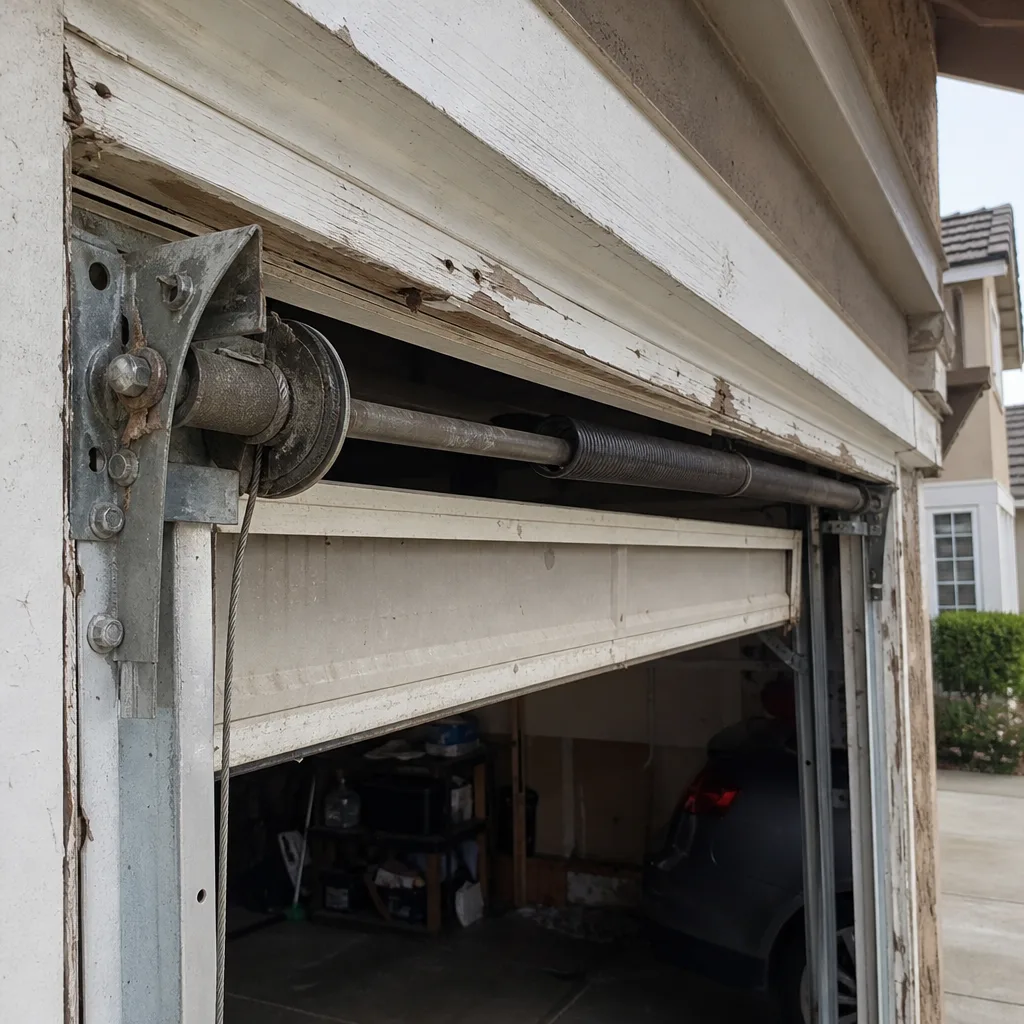 Before
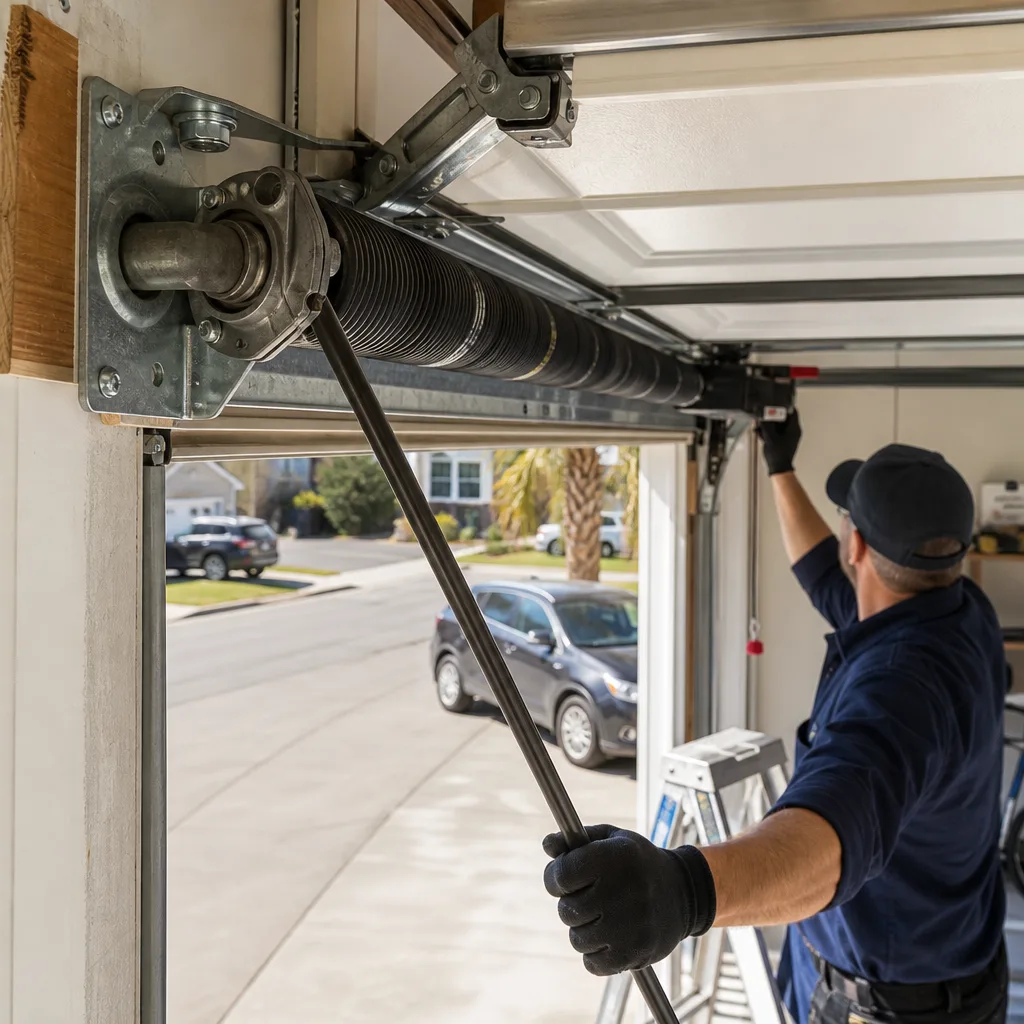 After
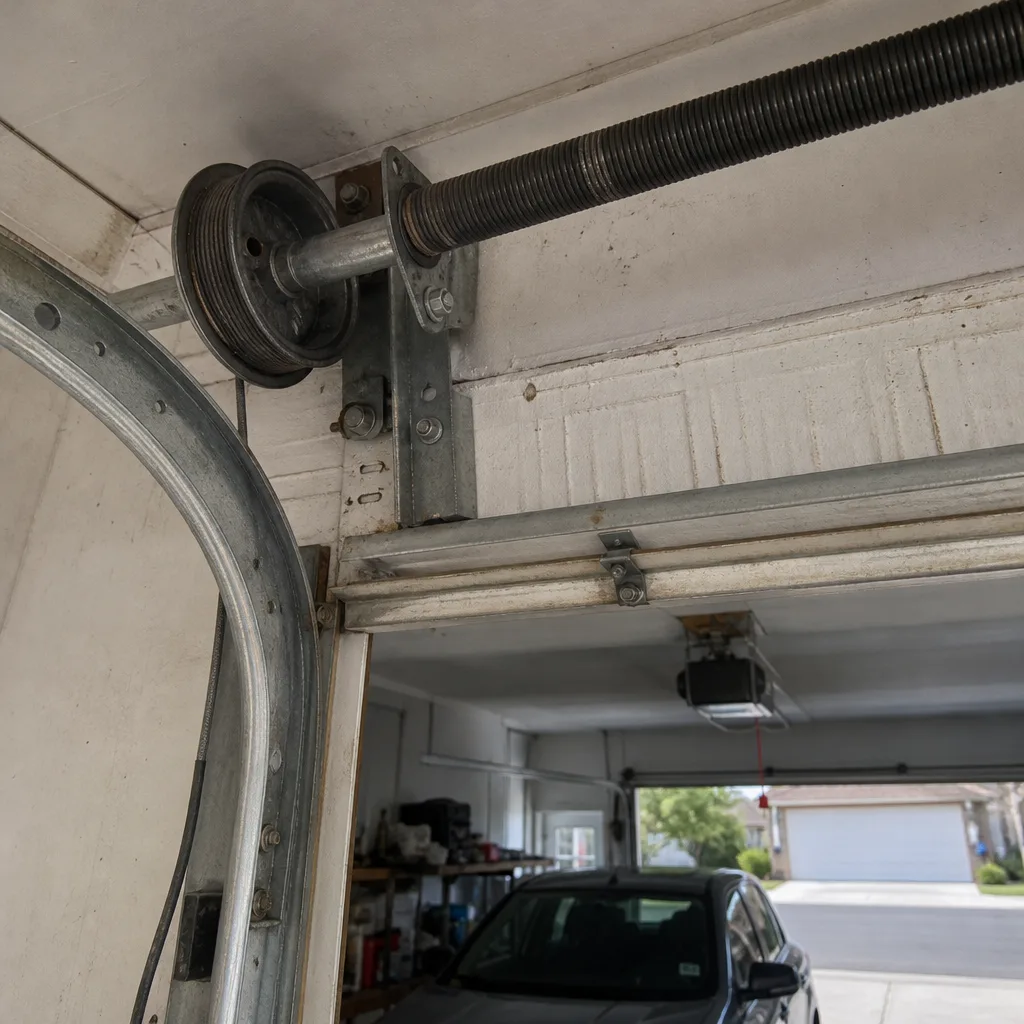 Before
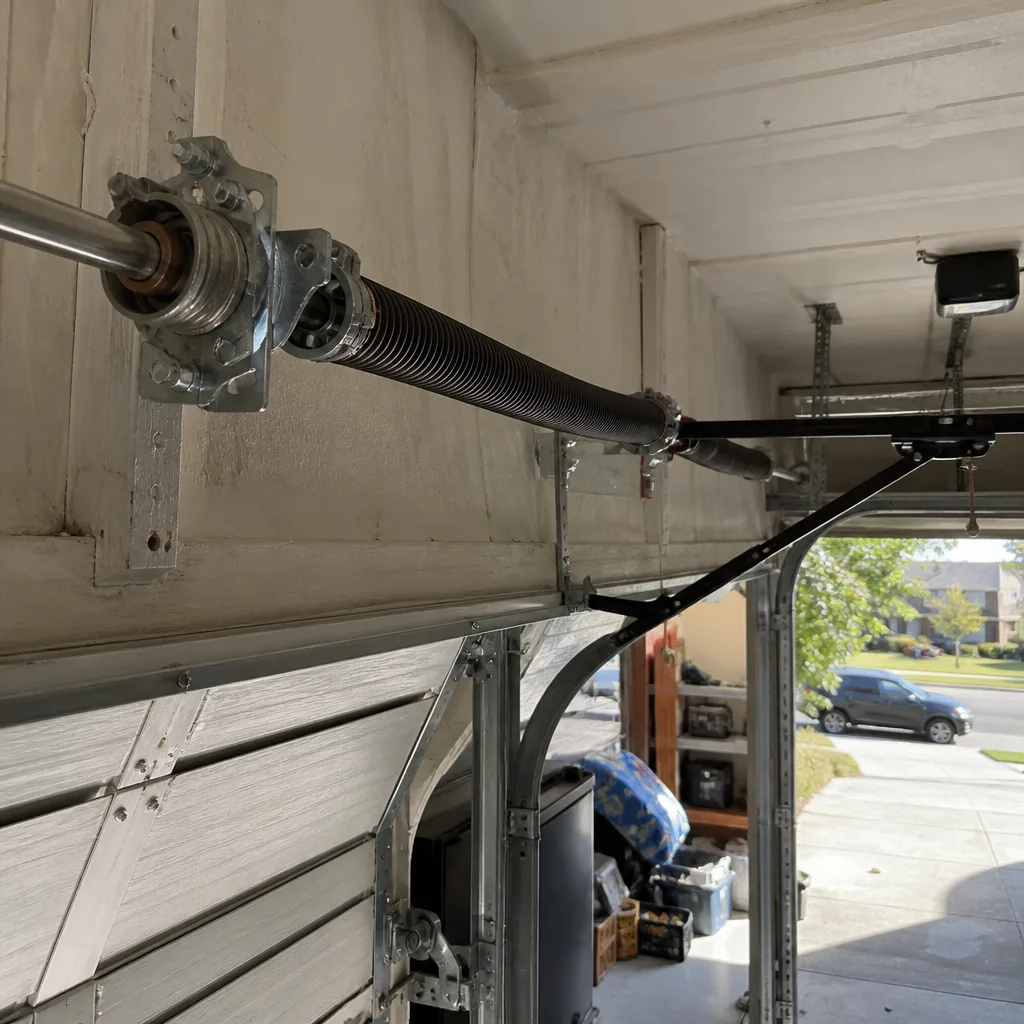 After
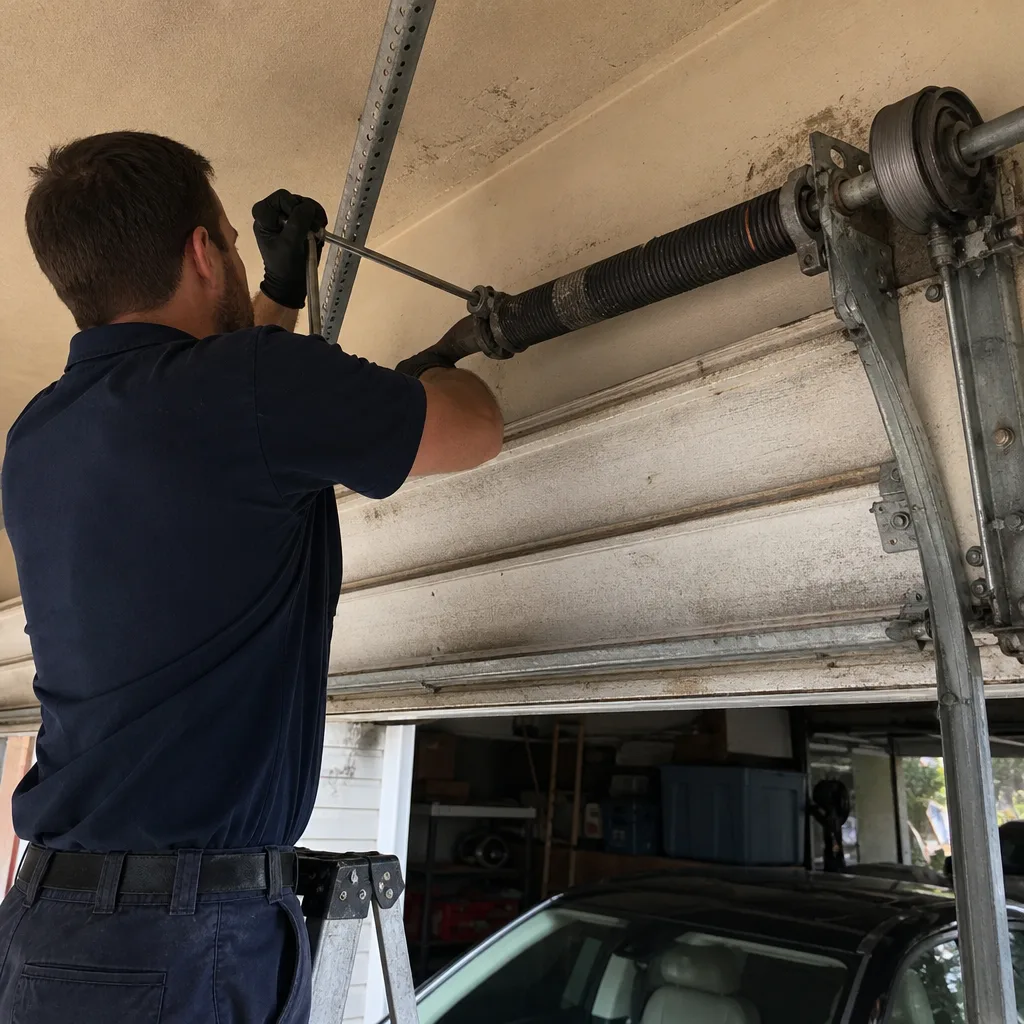 Before
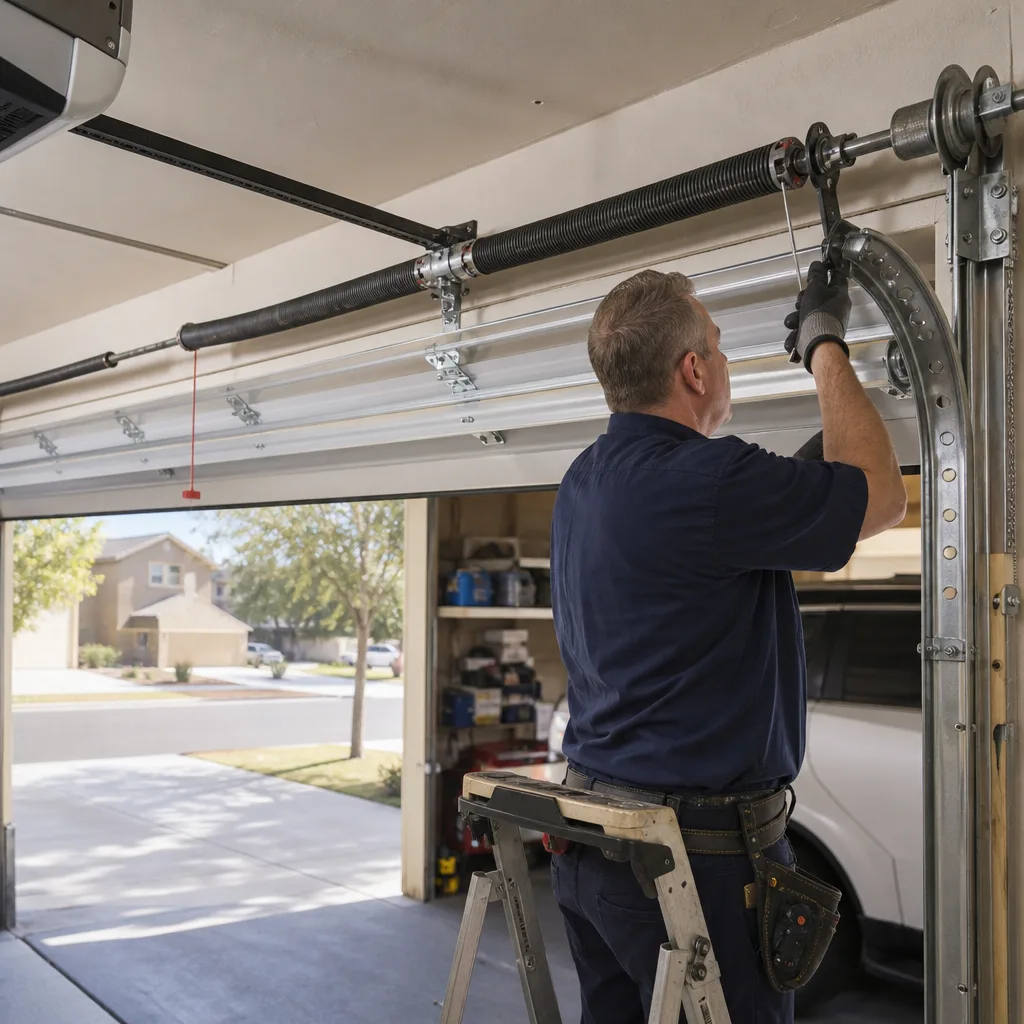 After
When to Call a Professional
If you’ve read this far and recognized one or more of these symptoms in your own door, you’re already ahead of most homeowners. The next step is a professional diagnosis. Torsion springs, cables, and track adjustments are not DIY territory, and no amount of YouTube research changes the fact that a garage door under tension can kill or maim. We know the hardware across all the major brands, from Clopay doors to Genie and Chamberlain openers, and we’ve diagnosed doors in every corner of Temecula, from the older homes near Old Town to the newer tracts off Butterfield Stage Road. Old Glory Garage Door offers free estimates in Temecula, call (877) 522-1085 to schedule a visit before a warning sign becomes a breakdown.
For a full scope of what repair covers, see Garage Door Repair in Temecula. If your opener is the source of the trouble, Garage Door Opener Repair in Temecula is the page for that. And when the door itself has reached the end of its useful life, Garage Door Installation in Temecula explains the replacement process from measurement to final balancing.
Frequently Asked Questions
The most common garage door problem in Temecula is a broken torsion spring, usually preceded by weeks or months of slower operation, increased noise, and the door feeling heavier when operated manually. Heat accelerates spring fatigue, so our service volume for spring failures consistently peaks between July and September.
A garage door that squeaks only in summer months is usually reacting to heat-expanded metal and dried-out lubrication. The heat doesn’t create the problem, but it reveals it by cooking off whatever lubricant remains and widening clearances enough to change the sound.
No. A door with a broken spring is unsupported weight, and the opener is not designed to lift it. Continuing to use the door risks bending the track, burning out the opener, and a sudden drop that can injure someone or damage a vehicle.
Spring replacement in Temecula typically ranges from $180 to $340 for a standard residential torsion spring pair, depending on the door size, spring cycle rating, and accessibility. The exact price is quoted and agreed before any work starts, and we carry the common spring sizes on the truck for same-visit replacement. Call (877) 522-1085 for a specific quote.
We recommend an annual tune-up for garage doors in Temecula, ideally in early spring before the summer heat. A typical service includes spring tension check, cable inspection, roller and hinge lubrication, track alignment, and opener force and travel adjustment. Annual service catches most of the warning signs in this guide before they become failures.
Yes. Old Glory Garage Door services all eight leading residential brands: LiftMaster, Chamberlain, Genie, Clopay, Amarr, Wayne Dalton, Craftsman, and Raynor. Whatever brand is on your door, we know it. We don’t sell one brand and we’re not tied to a single distributor, so the diagnosis is about what’s actually wrong with your equipment, not what we’re trying to sell you.
The Bottom Line
A garage door failure rarely comes out of nowhere. It comes wrapped in sounds, movements, and visual cues that were ignored for weeks or months. The hesitant opener, the frayed cable strand, the gap in the spring, the door that reverses occasionally, all of it is information. Learn to read it, and you’ll replace a $30 roller instead of a $300 opener. You’ll catch a spring at 90 percent instead of dealing with a snapped cable and a bent track. In Temecula, where the heat works constantly against every metal component of your door, an annual inspection and a habit of actually looking at the hardware once a month is the cheapest insurance you can buy. Straight answers, fair price, done right. That’s the whole job.
Written by the team at Old Glory Garage Door, serving Temecula since 2014.