
Last updated October 30, 2026
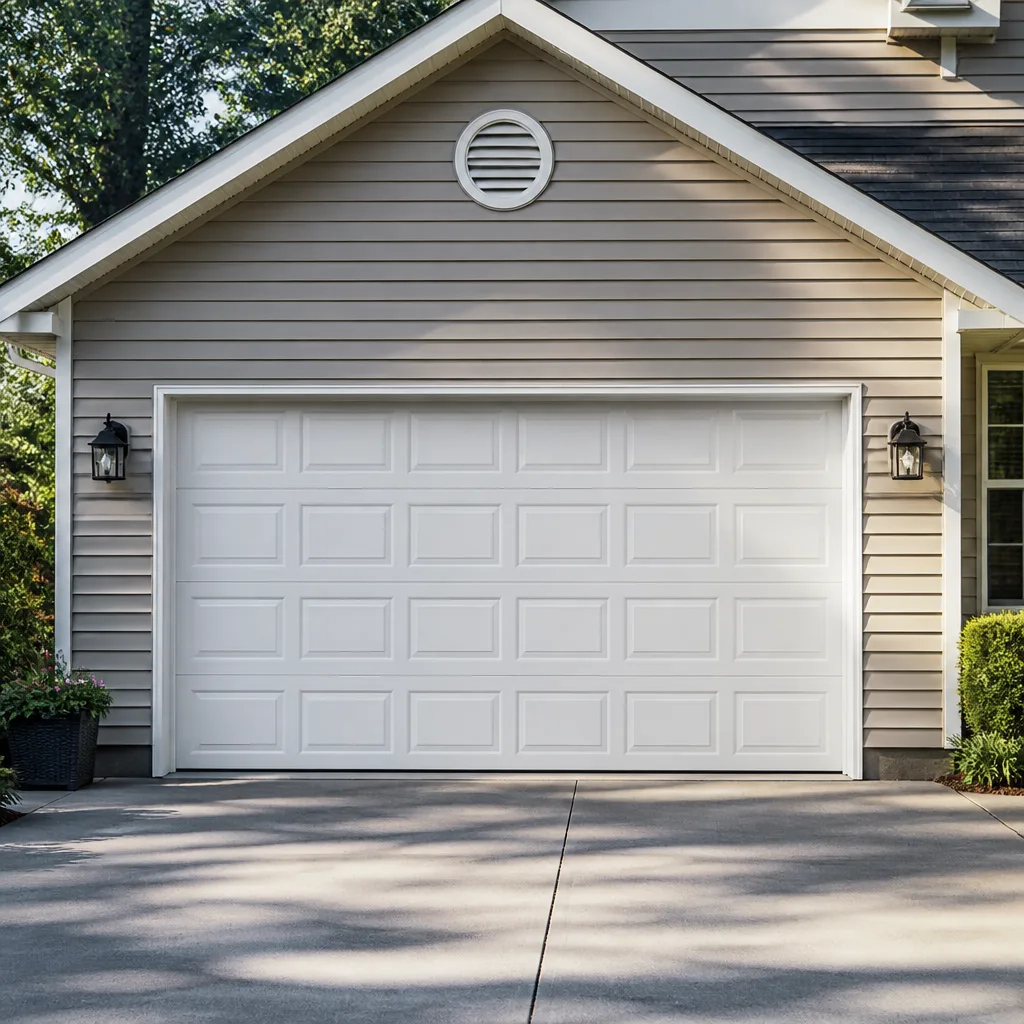 Raised-panel steel
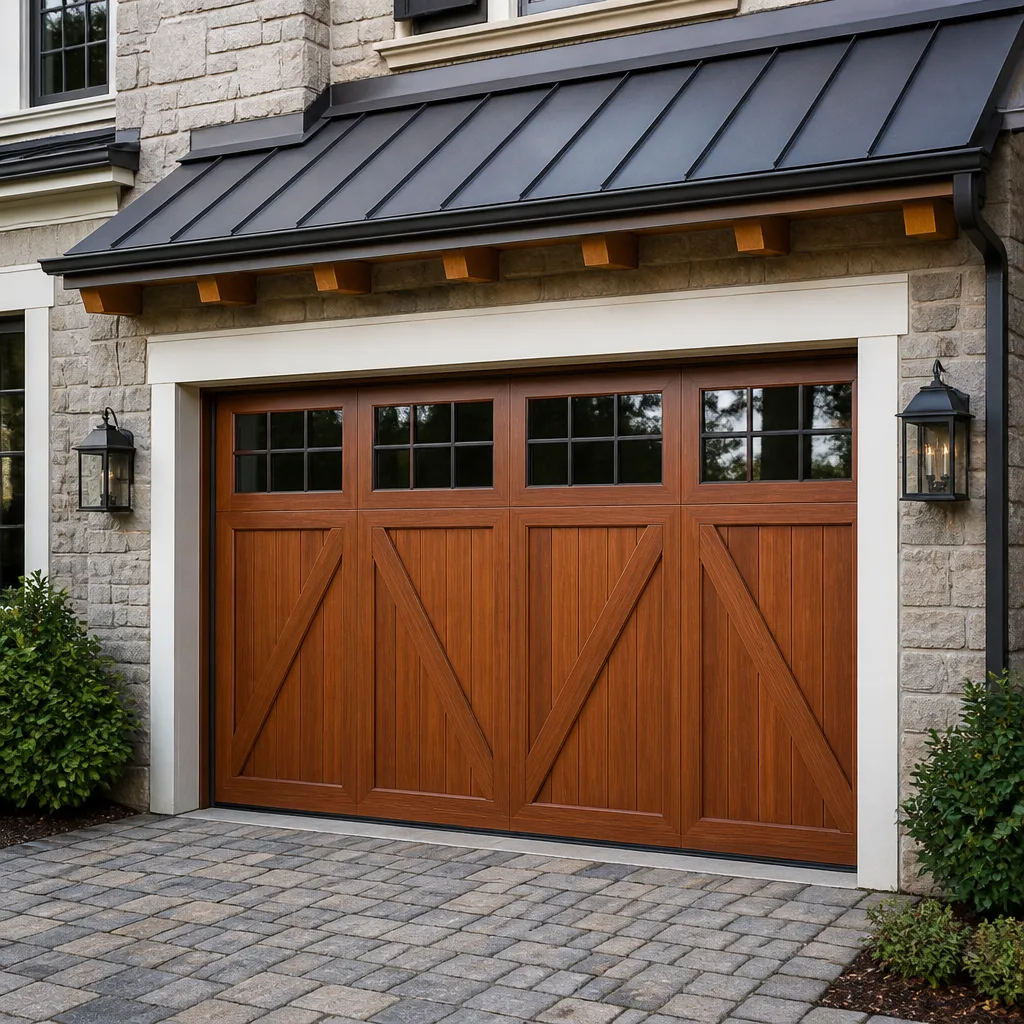 Carriage house
 Modern flush
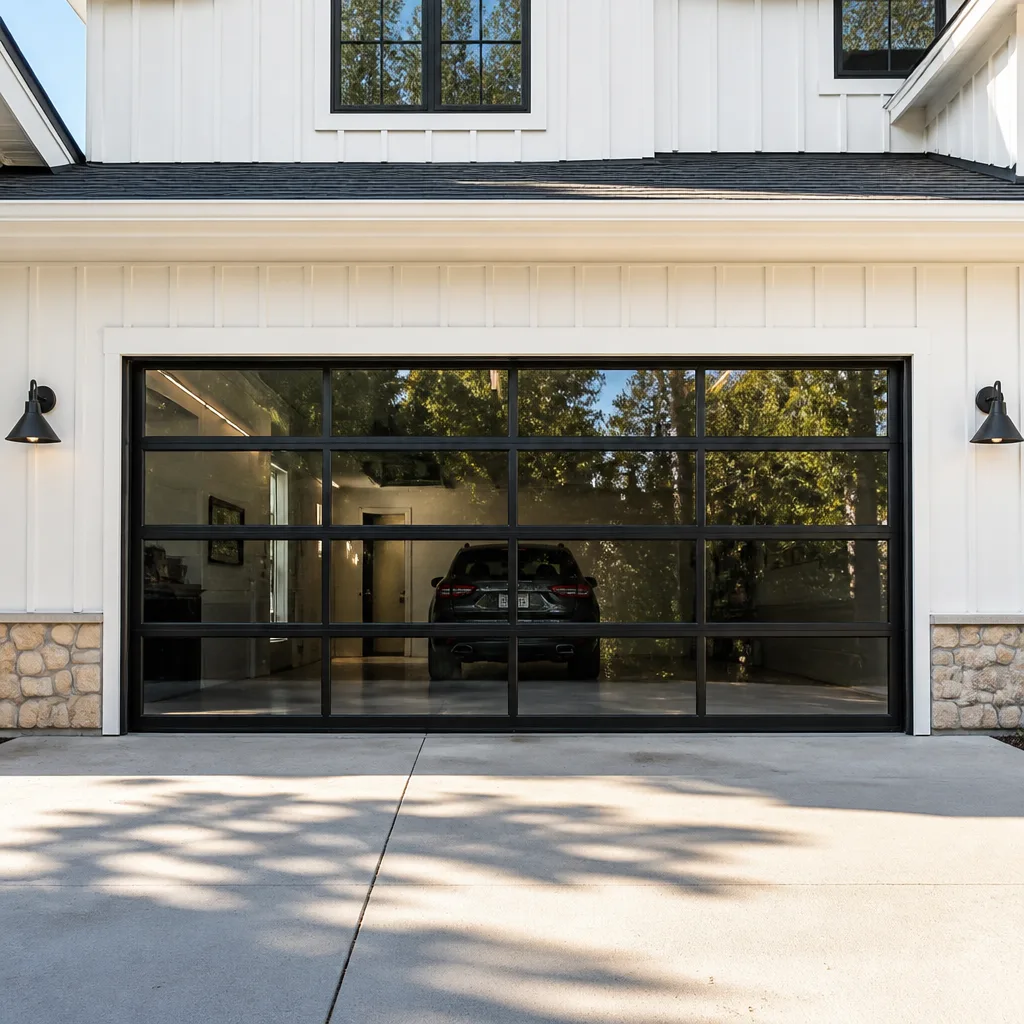 Full-view glass
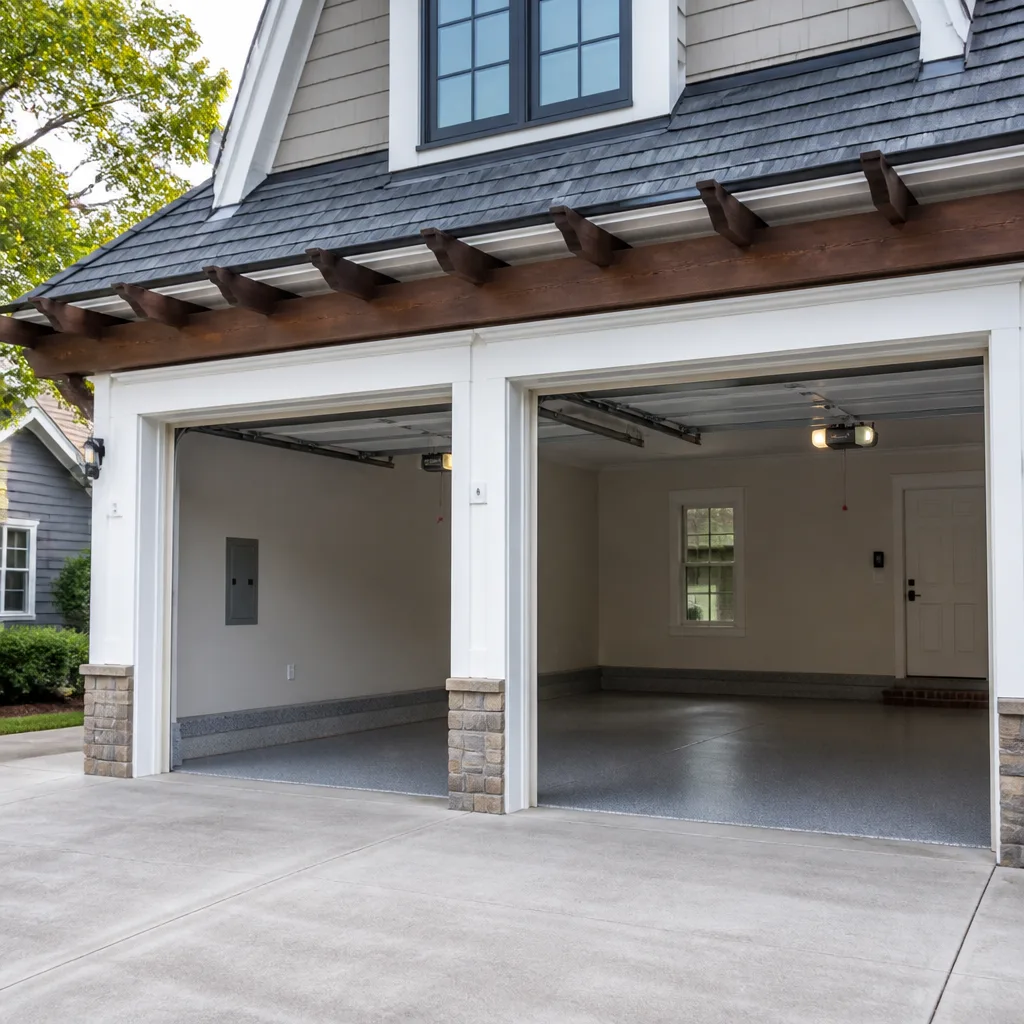 LiftMaster openers
 Chamberlain openers
Full 25-point door and opener safety check with every visit - springs, cables, rollers, tracks, and your LiftMaster or Chamberlain opener included
You get a price before we start. It does not change when the truck arrives.
Get your free estimateGarage Door Repair Maintenance Checklist for Temecula Homeowners
Most maintenance guides tell you to lubricate your garage door every six months. That advice was written for places like San Diego or Orange County, where ocean air keeps temperatures moderate. Temecula is different. We routinely see garage doors that were serviced in April start grinding by August because the heat off Wolf Store Road or Butterfield Stage simply bakes standard lubricants into a sticky, useless paste. This checklist is built for what actually happens to doors in Temecula, not for what a generic manufacturer’s manual assumes.
Styles & brands we work with
Quick Answer
A proper Temecula garage door maintenance routine has two parts: tasks you can safely do yourself every 3 – 4 months (lubricate rollers and hinges with white lithium grease, clean the tracks, inspect weatherstripping and cable condition visually, test the auto-reverse function), and tasks a trained technician should handle every 12 months (spring tension adjustment, cable replacement, opener force calibration, full hardware torque-down). The heat in Temecula compresses the normal maintenance window by half, so frequency matters more here than in coastal cities.
Table of Contents
- Why Temecula’s Climate Changes the Maintenance Rules
- Lubricant Selection: What Works in 100-Degree Heat
- The Homeowner DIY Checklist (Safe Tasks)
- The Professional-Only Checklist (Do Not DIY)
- How to Visually Inspect Cables and Springs Without Touching Them
- UV Damage on Weatherstripping and Bottom Seals
- A Maintenance Calendar Built for Temecula’s Seasons
- Common Mistakes to Avoid
- When to Call a Professional
- Frequently Asked Questions
- The Bottom Line
Why Temecula’s Climate Changes the Maintenance Rules
Temecula sits in a valley that traps heat. Summer days from June through September routinely exceed 95 degrees, and south- and west-facing garage doors absorb direct afternoon sun for hours. That changes how every moving part on your door behaves. The metal expands. Grease thins, then dries. Rubber seals bake and crack. Even the torsion spring, which is wound tight against gravity, experiences more extreme temperature swings here than a door in Fallbrook or Murrieta does.
Here’s the specific problem: standard garage door lubricant is designed for a temperature range of roughly 40 to 90 degrees. Temecula garage interiors, especially doors facing southwest toward the Santa Rosa Plateau, can hit 110 degrees or more by mid-afternoon. When lubricant exceeds its upper limit, the carrier solvent evaporates, leaving behind a gummy residue that attracts dust and grit. That residue turns into an abrasive paste on your rollers and hinges. Metal grinds on metal. Rollers wear flat, then the door starts shimmying, then a cable snaps. That’s the failure chain we see most often in Temecula.
What this means for you: maintenance you do in spring won’t carry you through summer. The schedule below is calibrated for our actual heat, not a national average.
And for the record, we service every major brand that is on homes out here. Whether your opener is a LiftMaster, a Chamberlain, or something else entirely, the maintenance steps are the same, but the failure points vary by brand and door age. If you’re unsure what you have, the Old Glory Garage Door home page breaks down what we work on for Temecula homeowners.
Lubricant Selection: What Works in 100-Degree Heat
This is where most Temecula homeowners go wrong, and it is the single most avoidable cause of premature garage door failure we see. The standard advice is to grab a can of silicone spray or “garage door spray” from the hardware store. In our climate, that is frequently the wrong product.
What you want is white lithium grease. Specifically, a lithium-based grease formulated for metal-on-metal contact. It stays stable at higher temperatures than standard silicone or petroleum sprays. It does not liquefy and drip off the hinge in July. It does not dry into a crust by September. It stays put.
What you do not want: WD-40. WD-40 is a solvent and water displacer, not a lubricant for load-bearing components. It will strip whatever lubricant is already there and leave the metal dry. We have seen rollers destroyed in under two months because a homeowner “lubricated” the door with WD-40 in May. That is a $200 mistake that starts as a $6 can.
Here is the lubrication and care breakdown:
- Rollers: Metal rollers with unsealed bearings need white lithium grease at each bearing. Nylon rollers with sealed bearings do not need lubrication; adding grease just holds grit.
- Hinges: White lithium grease on every pivot point, every 3 months during summer, every 6 months during the cooler half of the year.
- Tracks: Do not grease the tracks. Clean them with a dry rag. Greased tracks collect dust and cause the rollers to slide instead of roll, which wears them flat fast.
- Torsion spring: A light spray of white lithium grease once a year helps prevent surface rust, but the spring itself is under extreme tension. Do not touch it with your hands. Spray from a distance.
- Opener chain or belt: The chain on a Genie or LiftMaster opener gets a light application of chain lubricant once a year. Belts do not require lubrication ever.
In our experience, a Temecula door lubricated correctly with lithium grease in April will often still be running quietly in September. The same door sprayed with silicone in April will be grinding by July. The chemical matters. The heat makes it matter more.
The Homeowner DIY Checklist (Safe Tasks)
These are tasks any able-bodied homeowner can perform without special tools or training. None of these involve touching the spring, cables, or any component under tension. Set aside 45 minutes. Do this every 3 months between May and October, and every 6 months from November through April.
The 8-Step Temecula Seasonal Check
- Close the door and unplug the opener. Every inspection starts with the door down and the power disconnected. Do not work on a door with the opener plugged in, even if you think you will not trip the sensor.
- Wipe the tracks clean. Use a dry microfiber cloth. Wipe the full vertical and horizontal track on both sides. If you see caked-on grime, use a damp rag, then dry thoroughly. No grease, no oils.
- Lubricate hinges and metal rollers. Apply white lithium grease to every hinge pin on both sides of the door, top to bottom. If your rollers are steel with exposed bearings, a drop of grease at each bearing. If they are nylon with sealed bearings, leave them alone.
- Inspect the weatherstripping along the door frame. Run your fingers along the side and top seals. Look for cracks, splits, or areas where the seal has pulled away from the frame. Temecula’s UV exposure rots these faster than you would expect.
- Check the bottom seal. Close the door and look for light coming in under the door. If you see daylight, the bottom seal is flattened or cracked and should be replaced. This is one of the most common points of failure we replace for homeowners in Temecula.
- Test the auto-reverse safety feature. Open the door, place a 2×4 flat on the floor under the path of the door, and close the door. The door should hit the block and reverse direction within one second of contact. If it does not, the opener’s force setting is off, and this is a serious safety problem. Call a technician.
- Listen. Run the door through a full open-close cycle. A garage door in good shape is relatively quiet. Grinding, scraping, popping, or a door that shakes on its tracks all indicate something wrong. Early intervention costs less than a full cable replacement.
- Visually scan cables and springs from a distance. This is a look-don’t-touch step. Details below, but never put your hands on either part.
That is the entire safe DIY list. It covers 80% of what keeps a door healthy. The remaining 20% requires tools, training, and experience, which is where services like Garage Door Repair in Temecula come in.
The Professional-Only Checklist (Do Not DIY)
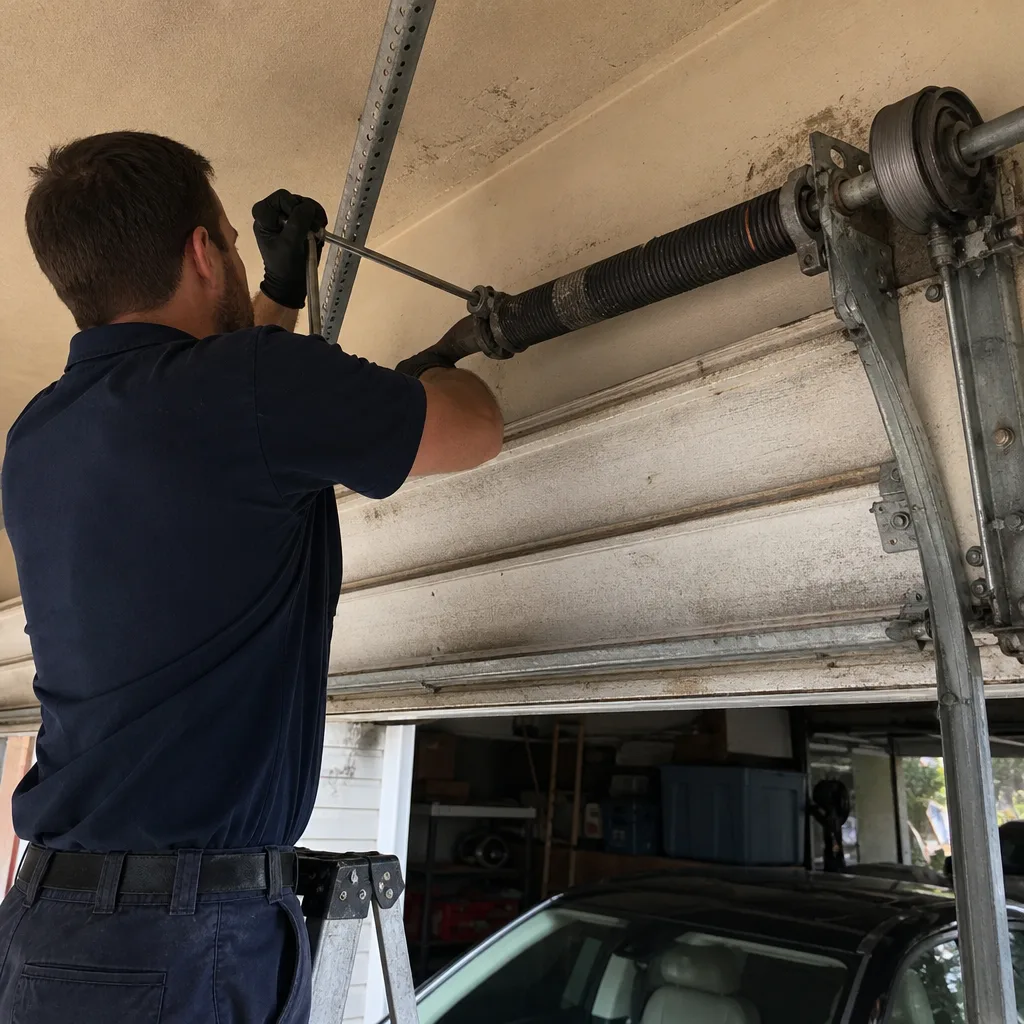
We are going to be direct about this: some maintenance tasks can kill or maim you. A torsion spring holds enough stored energy to break bones, sever fingers, or worse. Cables under tension can whip across a garage with enough force to cause serious injury. There is no adjustment trick that makes these components safe to work on without proper winding bars and training. When we say “call a technician” for Garage Door Repair services, we mean exactly that.
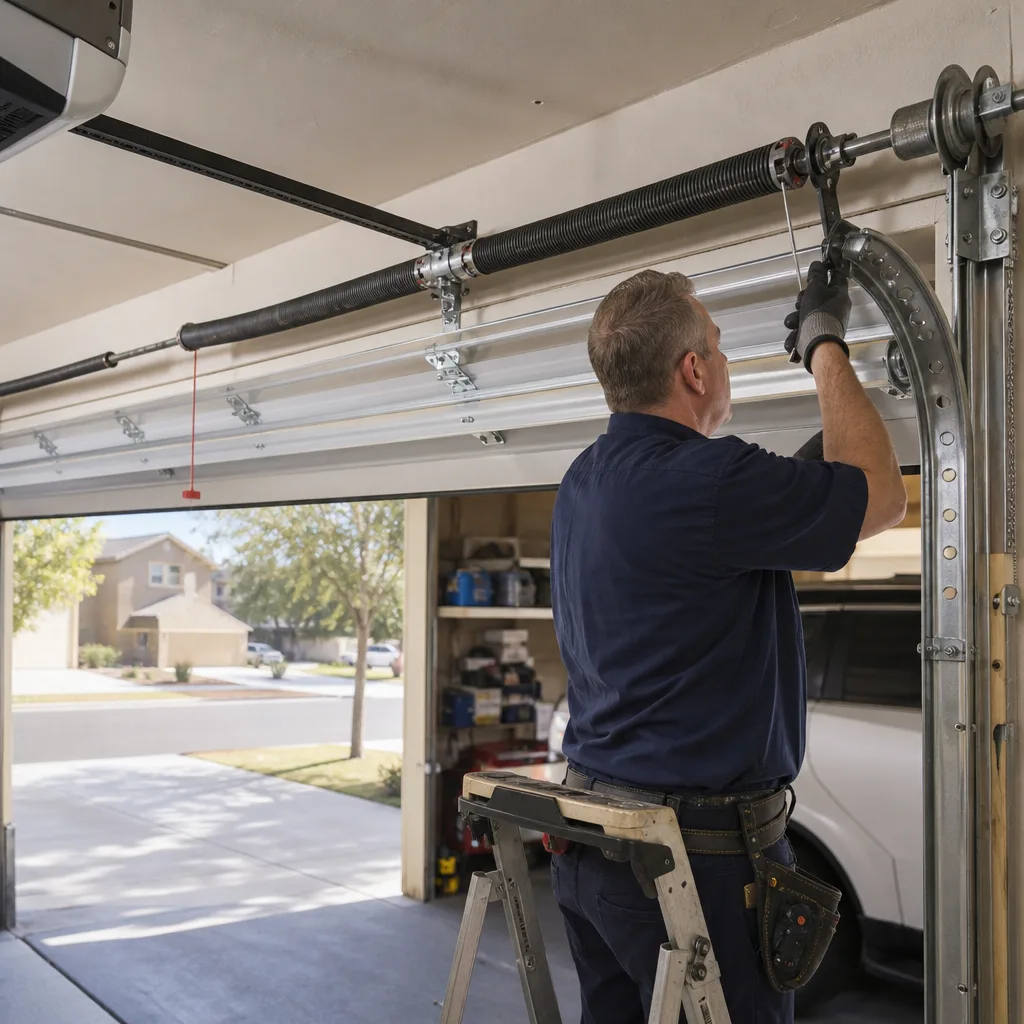
What Your Annual Technician Visit Should Cover
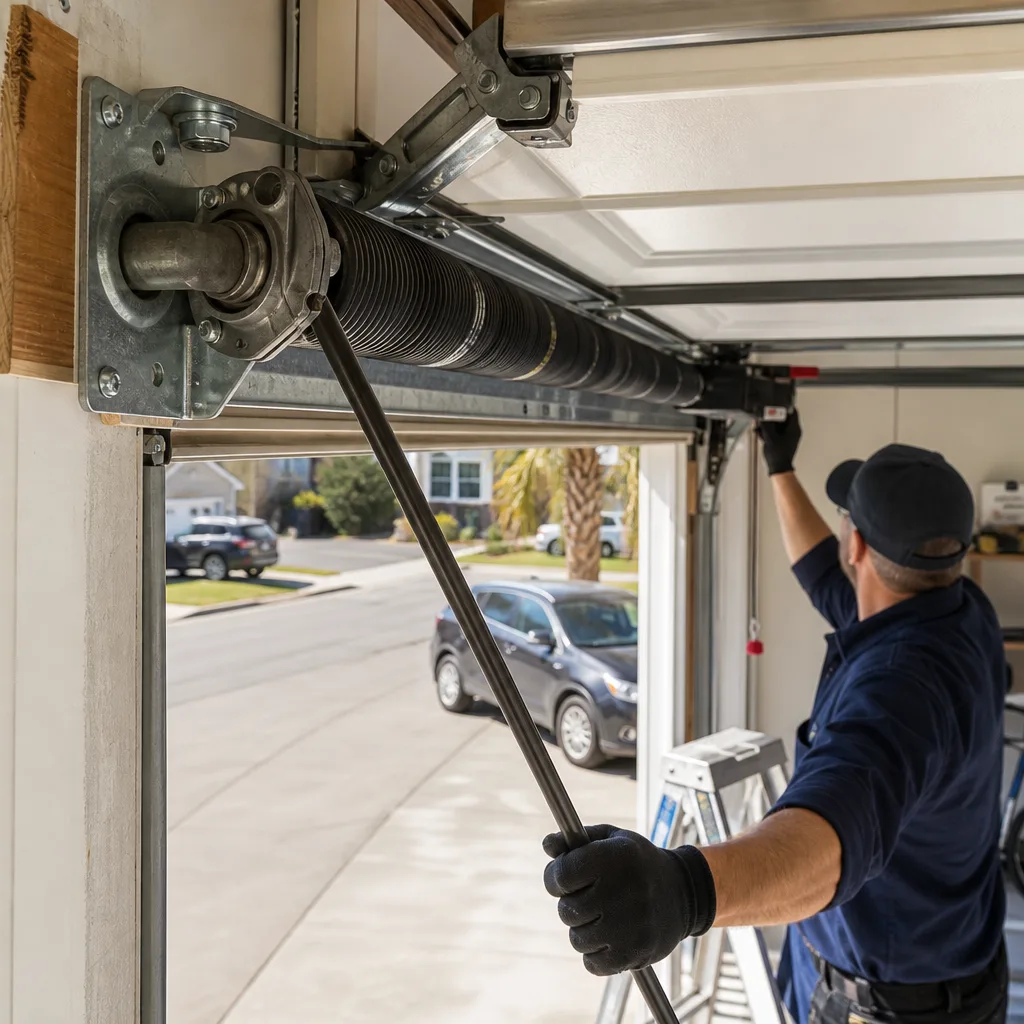
- Spring tension test and adjustment. A door that creeps open when you disengage the opener has a spring out of balance. A trained tech will measure the door’s weight distribution and rewound the spring to the correct tension for your specific door.
- Cable inspection and replacement. Frayed cables do not heal. A tech will inspect the full length of both cables and replace any that show significant wear before they snap mid-cycle.
- Opener force and travel limit calibration. Most openers on LiftMaster and Chamberlain units have digital force settings that drift over time. A tech resets these to the manufacturer’s specification for your door weight and size.
- Full hardware torque-down. Every nut, bolt, and bracket on your door, track, and opener rail gets checked and tightened. Vibration loosens hardware over time. A loose track bracket is a future derailment.
- Bearing and roller replacement assessment. Nylon rollers typically last 7 to 10 years in Temecula’s climate. Steel rollers can wear flat faster. Your tech will tell you which ones are marginal so you can plan the replacement, not get surprised by a door that jumps its track.
- Sensor alignment check. The photo-eye sensors on a Genie or Raynor opener can drift out of alignment due to vibration or an accidental bump. A tech verifies alignment and cleans the lenses.
A professional annual service is not a upsell. It’s the difference between a door that lasts 15 years and one that dies at 7. Any brand we service responds the same way to neglected maintenance. For the DIY portion of the list, we’ve got you covered with our more guides & resources. For anything above, call someone who does this every day.
How to Visually Inspect Cables and Springs Without Touching Them
You do not need to be a technician to catch early warning signs. You need to know what you are looking at and keep your hands off the components. Here is how visual inspection works for the two most dangerous parts of your door.
Inspecting the Cables
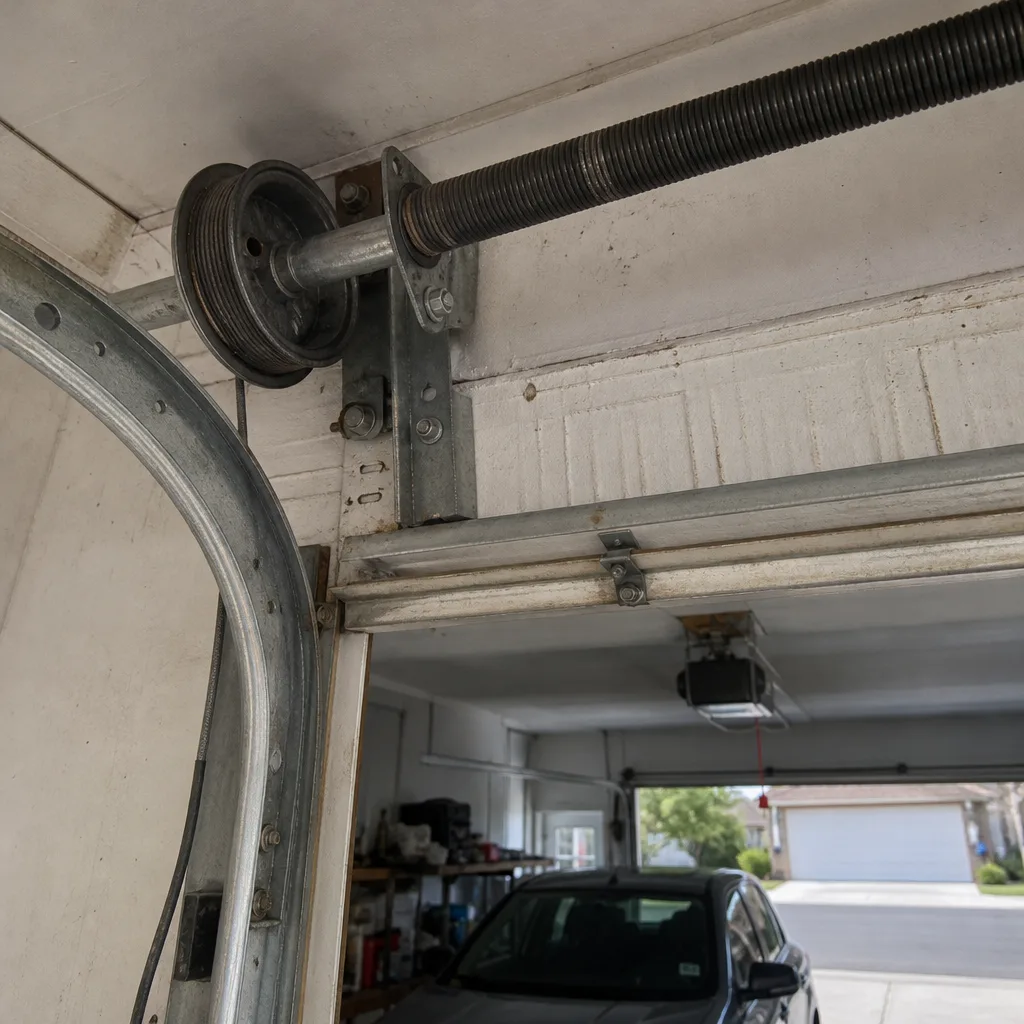
Stand inside the garage with the door closed. Look at the two vertical cables that run from the bottom brackets up to the drums above the door. In good condition, these cables are smooth and uniform in color. What you are looking for:
- Fraying: Individual wires poking out from the main cable body. This means the cable is starting to unravel and will eventually snap.
- Rust or corrosion: Brown or reddish patches. Temecula’s dry heat limits rust compared to coastal towns, but it still occurs, especially in older homes without good garage ventilation.
- Slack: The cable should be taut. If it looks loose or you can see visible gaps between the cable and the drum, something is wrong.
- Kinking: A sharp bend or fold in the cable that does not straighten out. Kinked cables fail fast.
If you see any of these, call a professional. A frayed cable under load can snap without warning, and the door can fall. That is not an exaggeration. We have responded to calls in Temecula where a snapped cable let a 250-pound door drop onto a parked car.
Inspecting the Torsion Spring
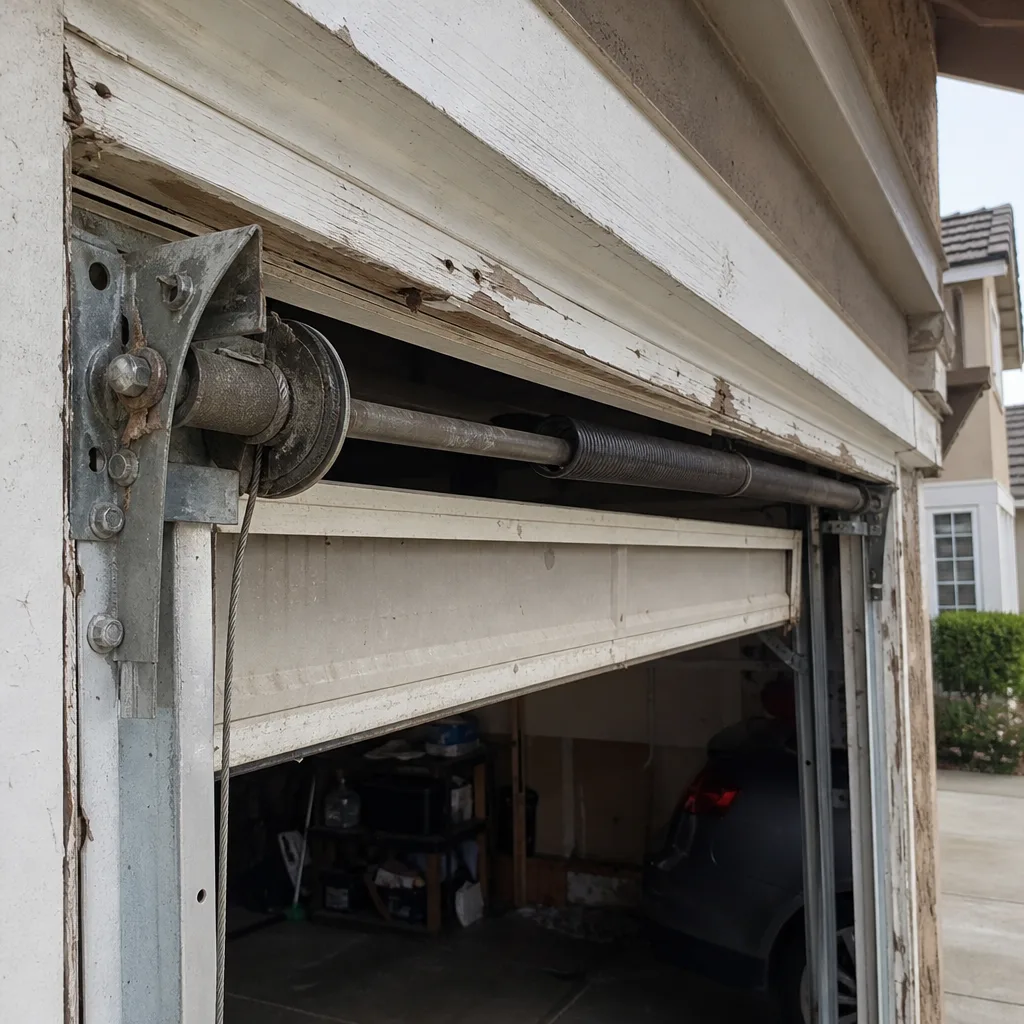
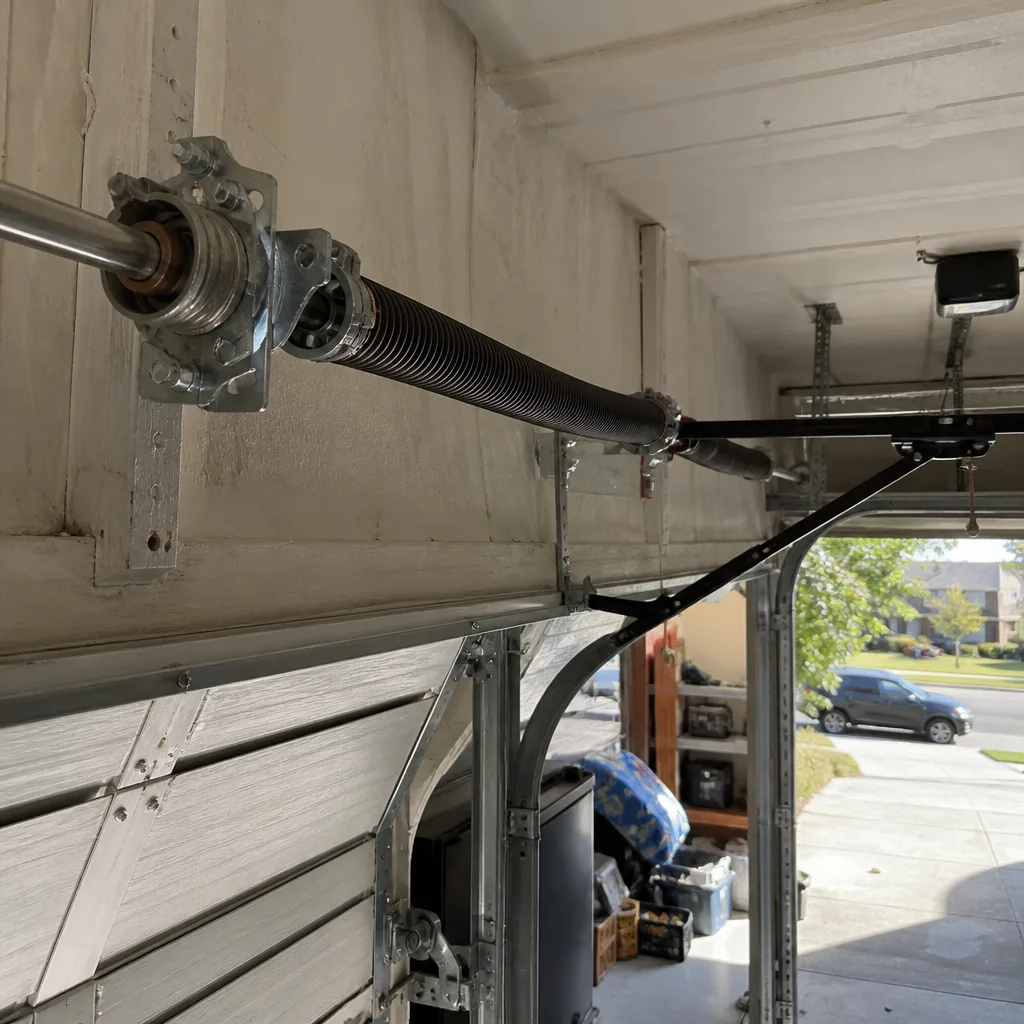
Look at the spring mounted horizontally above the door opening. A healthy spring is one continuous coil from end to end. What you are looking for:
- Visible gap in the coil: If the spring splits into two pieces with a gap in the middle, it has broken. This is a full spring replacement situation, not an adjustment.
- Uneven spacing between coils: Inconsistent gaps suggest the spring is worn and losing tension.
- Rust streaks or pitting on the spring surface: Surface rust is cosmetic but indicates the spring’s protective coating has failed and it will weaken over time.
The rule is simple: look with your eyes, not your hands. If any inspection step requires you to reach toward the spring or cables, stop and call someone who is trained. The garage door repair service we run in Temecula handles these inspections daily, and they are included in a standard service call.
UV Damage on Weatherstripping and Bottom Seals
Most maintenance checklists skip weatherstripping entirely, or give it one vague line. In Temecula, that is a costly oversight. Our sun does not just fade paint. It breaks down flexible rubber and vinyl seals through a process called UV degradation. The polymer chains in the material cross-link and harden. The seal loses flexibility. It cracks. Then the garage stops sealing properly.
Why that matters beyond energy efficiency:
- Dust and debris entry: Temecula gets real wind, especially in the fall. A failed bottom seal lets dust, leaves, and even small pests into the garage. If you store anything of value in there, you will notice the dust first.
- Rodent entry points: Rats and mice can squeeze through gaps as small as a quarter. A cracked or flattened bottom seal is a welcome mat for them.
- Heat gain: A poorly sealed garage gets hotter in summer, which shortens the life of anything stored inside and increases the temperature load on your opener’s motor.
- Water intrusion: Temecula does not get much rain, but when it does, it can be intense. A failed bottom seal in a January storm sends water under the door and onto whatever is on the garage floor.
South- and west-facing doors fail fastest. The sun hits them directly during peak afternoon heat. If your door faces the Santa Rosa Plateau or opens toward the setting sun, check the seals every two months from May through October. Replacement bottom seals cost less than $50 in materials and are a straightforward fix for a technician or a reasonably handy homeowner.
One more thing on seals: they are brand-specific. A Clopay door takes a different bottom seal profile than an Amarr or Wayne Dalton. If you replace a seal yourself, match the profile exactly. A seal that does not seat properly in the retainer channel is almost as bad as a cracked one. If you are not sure what profile you have, a technician can identify it in the field.
A Maintenance Calendar Built for Temecula’s Seasons
Here is the honest truth about garage door maintenance schedules: generic quarterly advice does not work in a climate with 100-degree summers and mild winters. Temecula’s maintenance calendar should front-load work into the shoulder seasons and increase lubrication frequency during peak heat.
January (Cool, occasional rain)
- Inspect bottom seal for leaks and proper contact with the concrete.
- Check weatherstripping around the frame for winter wear.
- Test auto-reverse function after any recent power outages.
April (Warm, pre-summer prep)
- Complete full DIY checklist.
- Lubricate all hinges and metal rollers with white lithium grease.
- Schedule annual professional service. Getting ahead of summer heat is the single best move for a Temecula door.
- Check cable condition carefully before the door sees its heaviest use of the year.
July (Peak heat, heaviest wear)
- Re-lubricate hinges and rollers. Three months in Temecula summer does more to break down grease than six months in winter.
- Check seals on south- and west-facing doors for cracking.
- Listen for new grinding or screeching sounds. Address them now, not in October.
October (Warm-to-cool transition)
- Complete full DIY checklist for the second time.
- Inspect cables and springs after summer’s thermal cycling.
- Clean tracks thoroughly. Summer dust settles and cakes in the vertical tracks.
- Check opener chain tension on chain-driven units.
The Pattern
Lubricate at least every 3 months from April through October. Inspect visually every month. Complete the full DIY checklist twice a year: April and October. Schedule a professional visit once a year, ideally in April or early May, before the heat hits. That pattern matches how doors actually fail in Temecula.
If you want a technician to handle the annual service or the full inspection, our opener repair service in Temecula includes a complete system check as part of every visit.
Common Mistakes to Avoid
- Using WD-40 instead of white lithium grease. WD-40 strips existing lubrication and leaves bearings dry. In Temecula heat, the resulting metal-on-metal contact destroys rollers fast.
- Greasing the tracks. This is the most common DIY error we see. Greased tracks hold dust and grit, turning your track into sandpaper for the rollers. Clean tracks are greaseless tracks.
- Touching or adjusting the torsion spring. The spring is under enormous tension. There is no safe YouTube tutorial for a homeowner to rewind one. Broken springs are for technicians, period.
- Ignoring a slow-moving door. A door that lags or creeps when the opener runs is a sign the spring is losing tension. Continued use converts that problem into a burned-out opener motor.
- Skipping auto-reverse testing after a power surge. Summer brownouts in Temecula can reset opener logic boards. After any power event, test the auto-reverse. Five minutes can save a crushed bicycle, or worse.
- Waiting to replace cracked weatherstripping. Torn seals are small problems that become pest problems, dust problems, and water problems. Replace them when you first notice cracking.
- Assuming all brands need the same care. Most do share maintenance principles, but the specifics of parts, seal profiles, and opener calibration vary. If you are not sure what your door brand requires, ask someone who works on all of them.
When to Call a Professional
A homeowner should handle cleaning, lubrication, seal checks, and visual inspections. Anything beyond that warrants a call. That includes any noise that sounds like grinding or popping, any visible cable fraying or spring gap, a door that will not stay closed or creeps open, an opener that reverses without obstruction, or any situation where the door is visibly unbalanced. These are not maintenance issues. They are repair issues that get worse, sometimes catastrophically, if they are ignored. Old Glory Garage Door offers free estimates in Temecula, works on all eight major brands, and shows up with the parts on the truck. Call (877) 522-1085. Someone will give you a straight answer about what is wrong and what it costs to fix.
Frequently Asked Questions
Every 3 months from April through October, and every 6 months the rest of the year. Temecula’s summer heat degrades lubricant roughly twice as fast as a coastal climate, so the standard “twice a year” advice is not enough for our springs and hinges. Use white lithium grease on hinges and metal rollers.
White lithium grease is the best choice for Temecula’s high summer temperatures. It stays stable where standard silicone sprays dry out or run off. Avoid WD-40 entirely; it strips lubrication and leaves metal parts dry. We recommend lithium grease for hinges, rollers with exposed bearings, and torsion spring surfaces.
No. A torsion spring is under enough tension to cause severe injury or death if it releases while you are working on it. Replacements require winding bars sized for the spring, correct tension calculations for your door’s weight, and experience. This is the one repair where we tell every Temecula homeowner to call a professional, no exceptions.
Look for visible fraying, rust, kinks, or slack. A healthy cable is smooth and taut. Any of those signs means the cable is compromised and could snap under load. When a cable snaps, the door can fall. If you spot any of these Garage Door Warning Signs: A Temecula Homeowner’s Reference Guide, call for service before the failure happens.
It is common in Temecula, but it is not normal. Heat causes lubricant to break down faster, so a door lubricated in April can start grinding by July. Loud operation in summer usually means the hinges and rollers are running dry. Re-lubricating with white lithium grease often resolves it. If it does not, the rollers or bearings are worn and need replacement.
Professional maintenance visits in Temecula typically range from $85 to $150 for a full inspection, lubrication, hardware tightening, and safety system testing. Repairs found during maintenance are quoted separately and agreed to before any work begins. Estimates are free, so call (877) 522-1085 to get an exact price for your door.
The Bottom Line
Your Temecula garage door is fighting heat, UV exposure, and dust every day it sits closed. The standard maintenance schedule written into a manual in Ohio does not apply. You need lithium grease, not spray lube. You need checks every 3 months in summer, not twice a year. You need to look at springs and cables without touching them. And you need to replace the seals that the sun is actively destroying. Do the safe work yourself, twice a year minimum. Call a professional for anything involving tension, cables, or anything you are not confident doing. For full door replacement, we install new doors in Temecula as well. A maintained door lasts 15 years. A neglected one dies at 7. The math is simple.
Written by the team at Old Glory Garage Door, serving Temecula since 2014.
See the difference
 Before
 After
 Before
 After
 Before
 After